Dr. Dipto Das
দীপ্ত দাস pronounced “Dip-toh Daash” Dipto means “bright” in Bengali

I am a Postdoctoral Associate in the Bowers College of Computing and Information Science at Cornell University, where I work with Dr. Aditya Vashistha as part of the Cornell Global AI Initiative. I study how AI systems and online platforms shape decision-making, public discourse, identity, and access to information.
My research centers on a recurring problem: algorithmic systems, and the mechanisms meant to hold them accountable, are often built on assumptions that do not hold where they are used. I focus especially on AI, studying it across the public sector, language technologies, and online platforms in low-resource and Global Majority contexts. A model can score well on standard benchmarks while still misrecognizing the identities of the people it claims to represent, and a government can make its algorithms visible without becoming accountable for them. To understand and close these gaps, I examine how AI is documented and governed, develop evaluation methods grounded in local context, and work with affected communities to build datasets and tools that let them shape how AI is assessed and repaired. Throughout, I combine computational audits and system building with qualitative, critical, and participatory methods. This work appears in venues such as CHI, CSCW, FAccT, AIES, DIS, GROUP, TOCHI, and USENIX Security, has received four Best Paper Honorable Mention Awards (most recently at CHI 2026 and DIS 2026), and has been featured in The Atlantic, CBC, the Ottawa Citizen, Prothom Alo, and Princeton University Press.
Before Cornell, I was a postdoctoral fellow in the Department of Computer Science at the University of Toronto, working with Dr. Syed Ishtiaque Ahmed and Dr. Shion Guha with funding from the Institute of Health Emergencies and Pandemics. I received my PhD and MS in Information Science from the University of Colorado Boulder, where I worked with Dr. Bryan Semaan, an MS in Computer Science from Missouri State University, and a BSEngg in Computer Science and Engineering from Bangladesh University of Engineering & Technology. I have taught seven courses as instructor of record at universities in the US, Canada, and Bangladesh, and received CU Boulder’s Teaching Excellence Award in 2024.
news
| Sep 12, 2026 | CBC Just Asking highlighted our FAccT ‘26 paper on Canadian AI register! |
|---|---|
| Aug 25, 2026 | Our paper on a global comparative study of AI registers got accepted at DxConf 2026 and our paper on how YouTubers negotiate audience tensions, platform governance, and state influence got accepted at GROUP 2027! |
| Aug 18, 2026 | I spoke on the CBC Ottawa Morning show about our FAccT ‘26 paper on Canadian AI register! |
| Aug 14, 2026 | I spoke to the Ottawa Citizen about our FAccT ‘26 paper on Canadian AI register! |
| Jul 16, 2026 | Our paper on Epistemic Fit/Barriers of Human Research in AI Safety and Ethics got accepted at AIES 2026! |
selected publications
- CHI
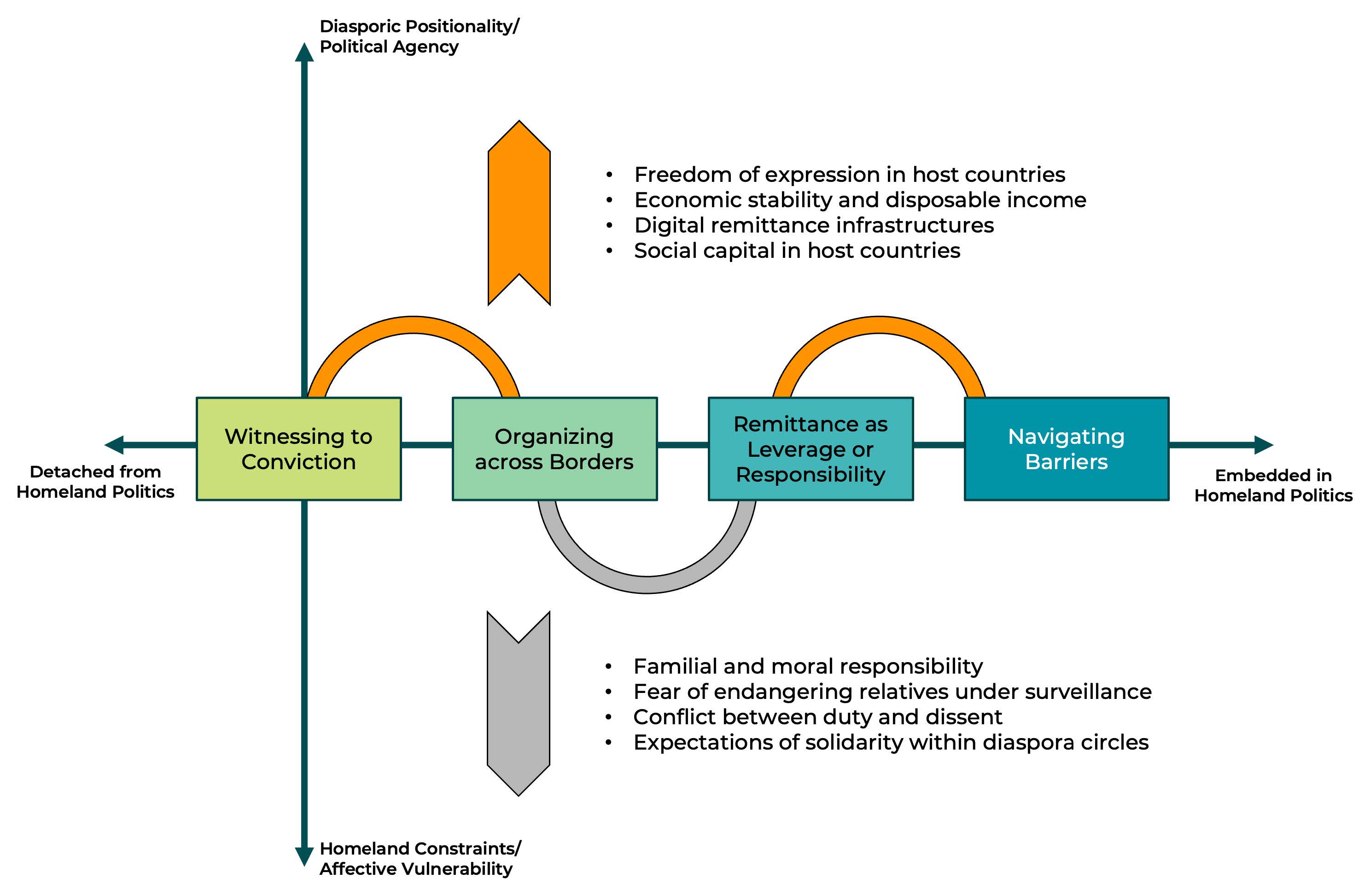 How do the Global South Diasporas Mobilize for Transnational Political Change?In Proceedings of the 2026 CHI Conference on Human Factors in Computing Systems, Barcelona, Spain, 2026