publications
Like other branches of Computer Science, top venues in HCI include extensively peer-reviewed conferences (e.g., CHI and CSCW). These extremely selective conferences, based on double-blinded peer review and intended for archival papers, are more prestigious compared to journals in terms of visibility and impact.
preprint
-
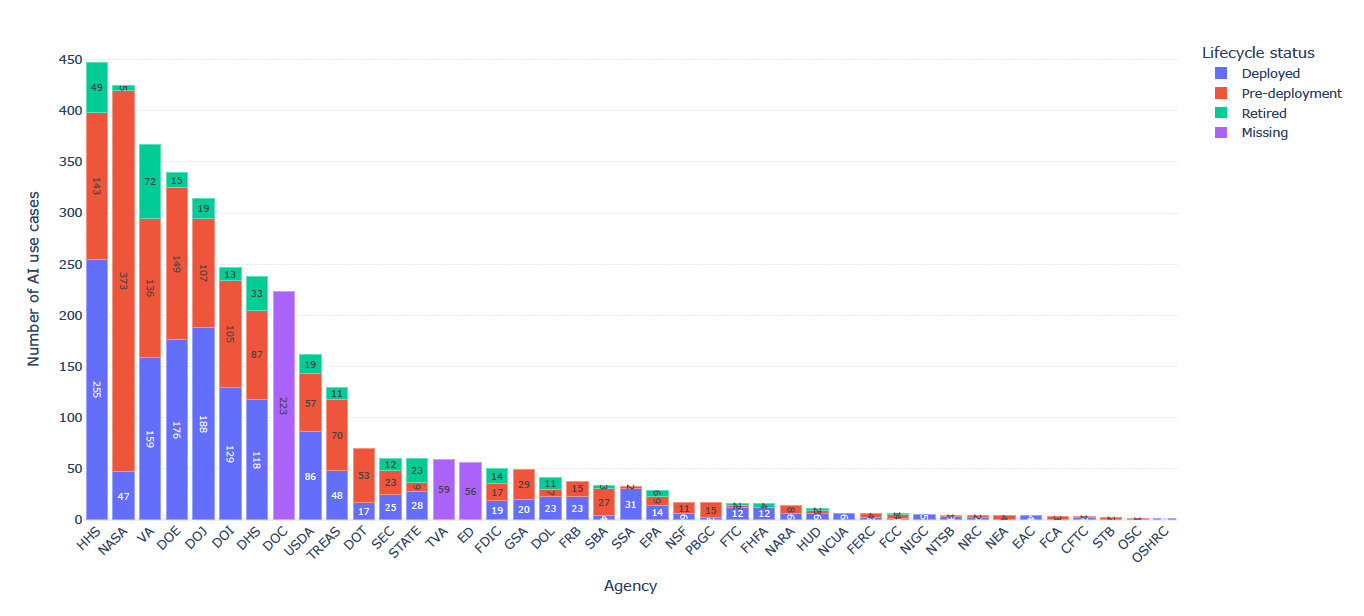 Fragmented Accountability and Under-explained Human Oversight in the United States Federal AI InventoryDipto Das, Syed Ishtiaque Ahmed, and Shion GuhaIn , preprint
Federal Artificial Intelligence (AI) inventories are increasingly framed as transparency mechanisms for documenting how public agencies adopt, classify, and govern algorithmic systems. In this paper, we analyze the 2025 United States Federal Agency AI Use Case Inventory as a public-facing governance artifact and disclosure infrastructure, combining quantitative mapping of 3,611 individually reported use cases across 56 agencies with qualitative analysis guided by the Algorithmic Decision-Making Adapted for the Public Sector framework. Our findings show that the inventory renders federal AI unevenly visible: reported use cases are concentrated across agencies, procurement and governance-related details are frequently incomplete, and impact classifications and claims of human oversight are often under-explained. We discuss how the inventory functions as an imbricated governance infrastructure, how classification performs boundary work in making AI systems governable, and how accounts of human-AI collaboration disclose formal oversight while often obscuring situated practices of judgment, contestability, and responsibility.
@inproceedings{pusai,
  author = {Das, Dipto and Ahmed, Syed Ishtiaque and Guha, Shion},
  title = {Fragmented Accountability and Under-explained Human Oversight in the United States Federal AI Inventory},
  booktitle = {},
  year = {preprint},
  doi = {},
  methods = {cda, quant},
  filter_type = {full}
}
2027
- GROUP
 Decolonial Discourse in Postcolonial Contexts: How YouTubers Negotiate Audience Tensions, Platform Governance, and State InfluenceDipto Das and Bryan SemaanProc. ACM Hum.-Comput. Interact., Jan 2027
Decolonial discourse on online platforms is often framed in terms of creator motivations and expressive possibilities. In this paper, we examine what it takes to sustain such discourse under layered sociotechnical constraints. Drawing on semi-structured interviews with YouTubers engaging in Bengali decolonial discourse, we analyze how audience publics, platform governance, and state influences shape what becomes sayable, visible, and viable. We show how fragmented postcolonial identities among audiences produce legitimacy policing, harassment, and coordinated backlash, requiring ongoing relational labor from creators. At the platform level, differential monetization, opaque moderation, and copyright regimes reorganize which publics are economically viable and reinforce existing hierarchies. Further, intermediaries such as multi-channel networks mediate regulatory pressure, introducing political risks and constraints on participation. In response, content creators engage in strategies of negotiation, including boundary work, infrastructural improvisation, and multi-platform distribution. Overall, our findings highlight the layered dynamics of decolonial discourse in postcolonial contexts and the continuous work required to sustain it in platformed environments.
@article{das2027decolonial, author = {Das, Dipto and Semaan, Bryan}, title = {Decolonial Discourse in Postcolonial Contexts: How YouTubers Negotiate Audience Tensions, Platform Governance, and State Influence}, year = {2027}, month = jan, publisher = {Association for Computing Machinery}, journal = {Proc. ACM Hum.-Comput. Interact.}, issue = {GROUP}, methods = {qual}, filter_type = {full} } - GROUP
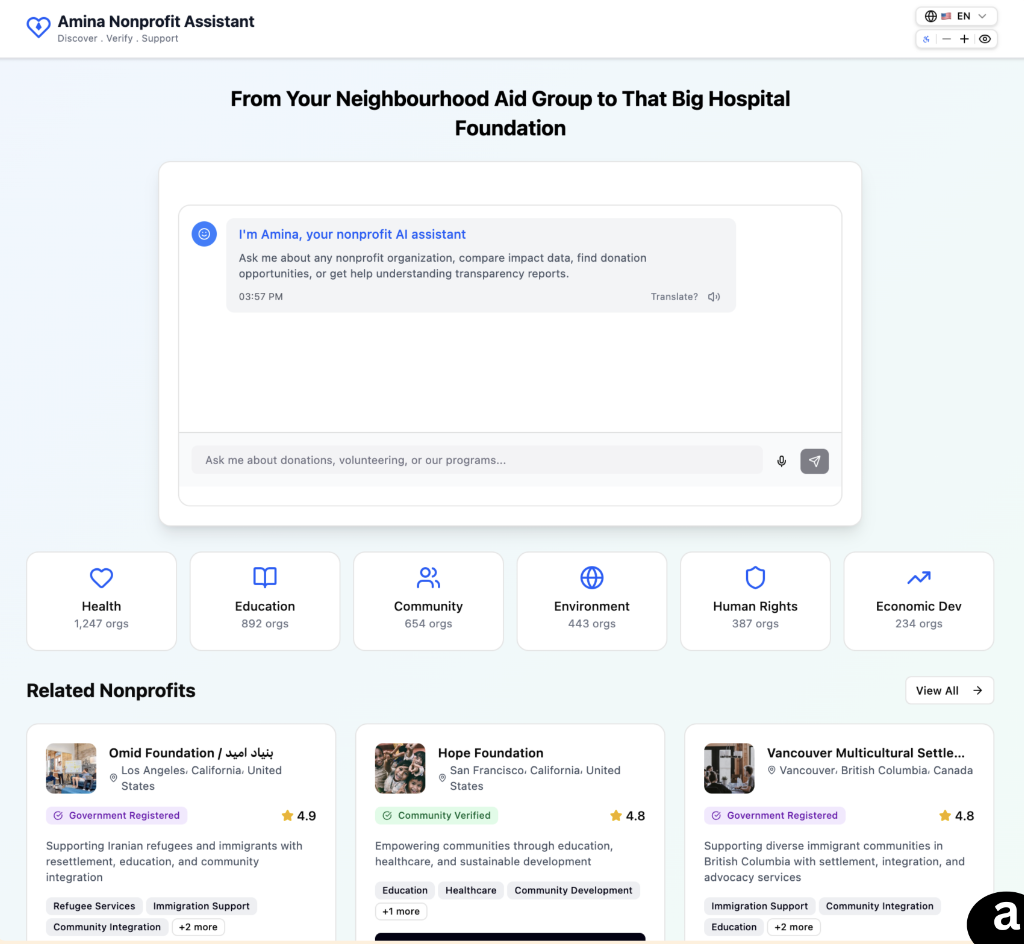 AMINA: The Inclusive and Accountable AI for Marginalized Immigrant Nonprofit AssistanceMaryam Mokhberi, Dipto Das, and Syed Ishtiaque AhmedProc. ACM Hum.-Comput. Interact., Jan 2027
@article{mokhberi2027amina, author = {Mokhberi, Maryam and Das, Dipto and Ahmed, Syed Ishtiaque}, title = {{AMINA}: The Inclusive and Accountable {AI} for Marginalized Immigrant Nonprofit Assistance}, year = {2027}, month = jan, publisher = {Association for Computing Machinery}, journal = {Proc. ACM Hum.-Comput. Interact.}, issue = {GROUP}, methods = {qual}, filter_type = {full} }
2026
- AIES
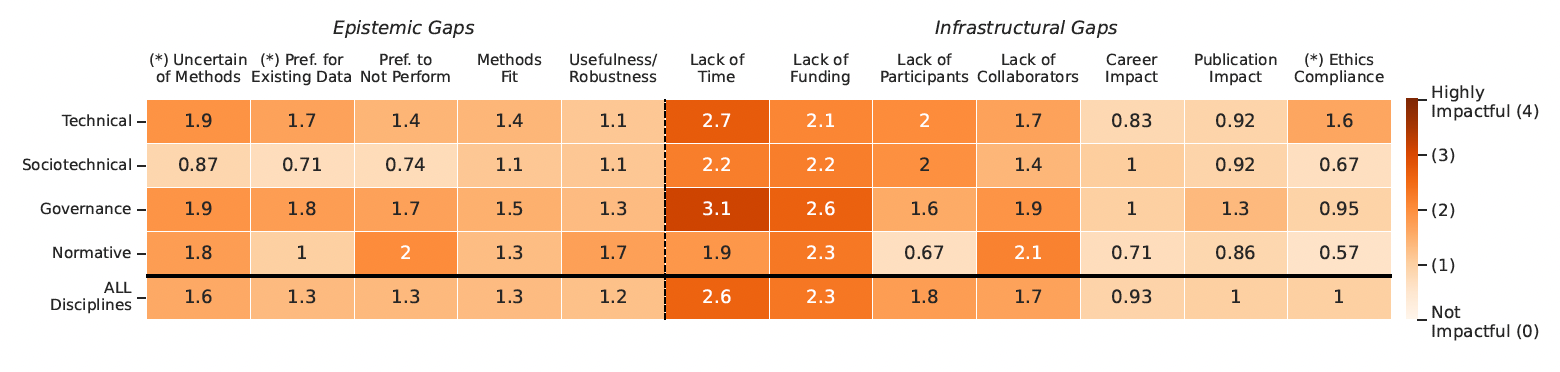 Studying People to Study AI: Expert Perspectives on the Epistemic Fit and Barriers of Human Research in AI Safety & EthicsJessica Y. Bo, Paula Akemi Aoyagui, Shalaleh Rismani, and 3 more authorsIn Proceedings of the Ninth AAAI/ACM Conference on AI, Ethics, and Society (AIES ’26), 2026
Safety risks of AI are becoming increasingly evident in human interactions with AI technologies. The prominent approaches to evaluate these risks favor more technical methods, such as model benchmarks and LLM simulations, overlooking empirical research methods, despite the latter’s established role in grounding claims about real-world harm. To examine this trend, we conduct an expert survey (n = 93) and expert interviews (n = 17) with AI Safety & Ethics (AISE) researchers from Technical, Sociotechnical, Governance, and Normative backgrounds. Our findings suggest that although there is a consensus that human research is valuable for generating evidence for AISE, its adoption and acceptance are constrained by perceived validity issues, tangible resource barriers, epistemic and personal preferences in methods, and infrastructural constraints from the broader research community. In particular, Technical researchers tend to value human research less and collaborate across disciplines less. We propose recommendations for establishing the epistemic fit of human research within AISE and bridging the prohibitive limitations that researchers face
@inproceedings{bo2026studying, author = {Bo, Jessica Y. and Aoyagui, Paula Akemi and Rismani, Shalaleh and Das, Dipto and Ahmed, Syed Ishtiaque and Anderson, Ashton}, title = {Studying People to Study {AI}: Expert Perspectives on the Epistemic Fit and Barriers of Human Research in {AI} Safety \& Ethics}, booktitle = {Proceedings of the Ninth {AAAI/ACM} Conference on {AI}, Ethics, and Society ({AIES} '26)}, year = {2026}, doi = {}, methods = {quant}, filter_type = {full} } - CHI
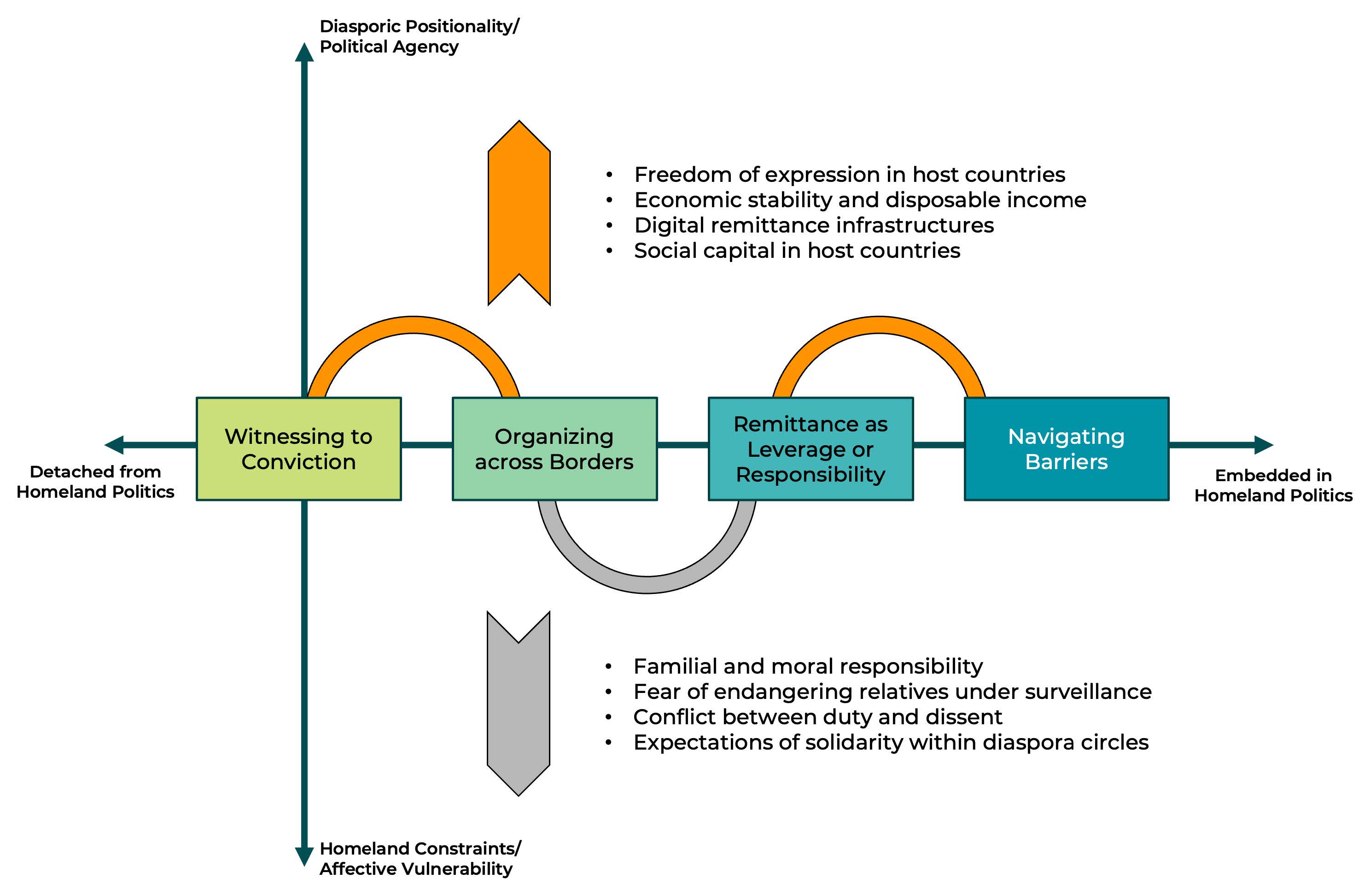 How do the Global South Diasporas Mobilize for Transnational Political Change?Dipto Das, Afrin Prio, Pritu Saha, and 2 more authorsIn Proceedings of the 2026 CHI Conference on Human Factors in Computing Systems, Barcelona, Spain, 2026
Best Paper Honorable Mention
This paper examines how non-resident Bangladeshis mobilized during the 2024 quota-reform turned pro-democracy movement, leveraging social platforms and remittance flows to challenge state authority. Drawing on semi-structured interviews, we identify four phases of their collective action: technology-mediated shifts to active engagement, rapid transnational network building, strategic execution of remittance boycott, reframing economic dependence as political leverage, and adaptive responses to government surveillance and information blackouts. We extend postcolonial computing by introducing the idea of \emph“diasporic superposition," which shows how diasporas can exercise political and economic influence from hybrid positionalities that both contest and complicate power asymmetries. We reframe diaspora engagement by highlighting how migrants participate in and reshape homeland politics, beyond narratives of integration in host countries. We advance the scholarship on financial technologies by foregrounding their relationship with moral economies of care, state surveillance, regulatory constraints, and uneven international economic power dynamics. Together, these contributions theorize how transnational activism and digital technologies intersect to mobilize political change in Global South contexts.
@inproceedings{10.1145/3772318.3791792, author = {Das, Dipto and Prio, Afrin and Saha, Pritu and Guha, Shion and Ahmed, Syed Ishtiaque}, title = {How do the Global South Diasporas Mobilize for Transnational Political Change?}, year = {2026}, isbn = {9798400722783}, publisher = {Association for Computing Machinery}, address = {New York, NY, USA}, doi = {10.1145/3772318.3791792}, booktitle = {Proceedings of the 2026 CHI Conference on Human Factors in Computing Systems}, date = {April 13--17}, pages = {}, keywords = {Diaspora, Remittance, Financial Technology, Bangladesh, Boycott}, location = {Barcelona, Spain}, series = {CHI '26}, methods = {interview, qual}, filter_type = {full} } - COMPASS
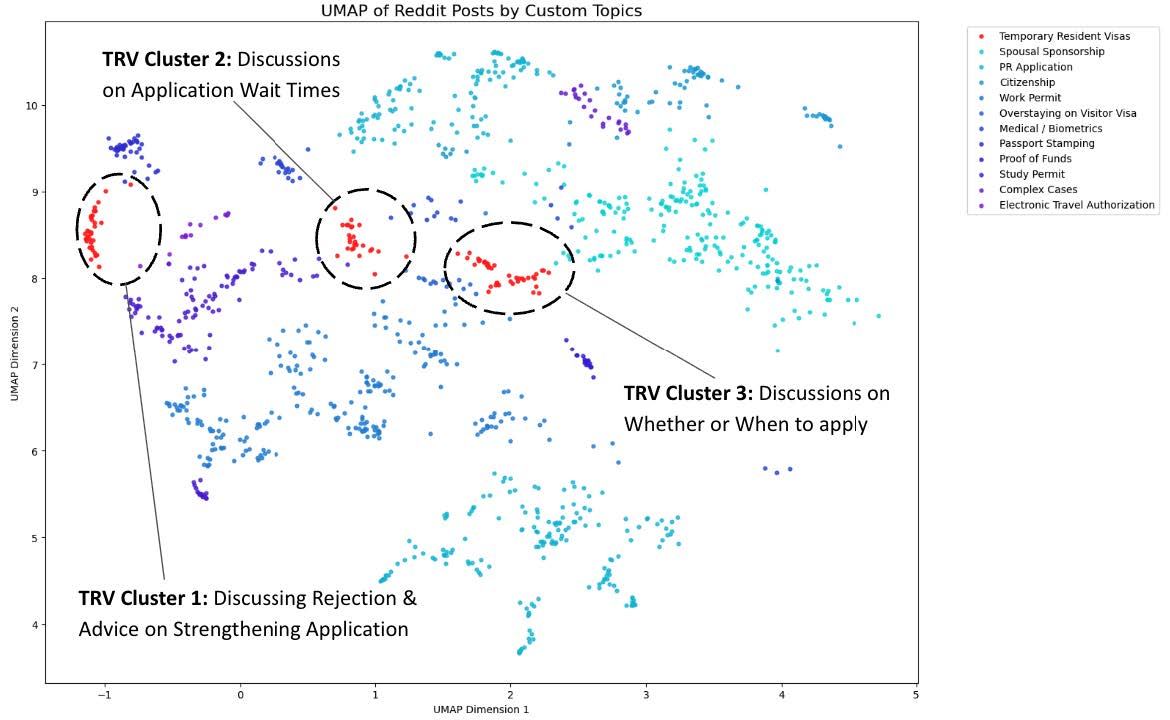 “Is This Not Enough?”: Asymmetries in Institutional Accountability and Collective Sensemaking in the Case of Canada’s Algorithmic Visa Triage SystemDipto Das, Matthew Tamura, Syed Ishtiaque Ahmed, and 1 more authorIn Proceedings of the ACM SIGCAS/SIGCHI Conference on Computing and Sustainable Societies, Virtual Event, 2026
This paper examines how algorithmic accountability in Canada’s visa system is articulated institutionally and experienced by applicants across borders. We analyzed Immigration, Refugees and Citizenship Canada (IRCC)’s Algorithmic Impact Assessment (AIA) for the temporary resident visa (TRV) triage system using the algorithmic decision-making adapted for the public sector (ADMAPS) framework and analyzed Reddit discussions among applicants using a mixed-methods approach. We show that while institutional artifacts emphasize transparency, procedural safeguards, and bounded impacts, applicants engage in collective sensemaking to interpret opaque decisions, often relying on peer knowledge amid uncertainty. We identify three asymmetries between how institutional accountability is structured and how people perceive the process: epistemic asymmetry in access to decision logic, jurisdictional asymmetry in exposure shaped by geopolitical positioning, and temporal–relational asymmetry in how waiting and uncertainty are experienced. We emphasize why it is important to shift attention from institutional design to the uneven distribution of experiences with public-sector algorithmic governance. Together, these contributions demonstrate how algorithmic governance systems in the context of transnational migration produce structured asymmetries not captured by institutional disclosure frameworks, and how extending ADMAPS can account for those uneven translations of accountability.
@inproceedings{das2026asymmetries, author = {Das, Dipto and Tamura, Matthew and Ahmed, Syed Ishtiaque and Guha, Shion}, title = {``Is This Not Enough?'': Asymmetries in Institutional Accountability and Collective Sensemaking in the Case of Canada's Algorithmic Visa Triage System}, booktitle = {Proceedings of the ACM SIGCAS/SIGCHI Conference on Computing and Sustainable Societies}, series = {COMPASS '26}, year = {2026}, date = {2026-07-27/2026-07-31}, location = {Virtual Event}, publisher = {Association for Computing Machinery}, address = {New York, NY, USA}, keywords = {Algorithmic Impact Assessment, Canada, Immigration, Visa, Accountability}, url = {https://doi.org/10.1145/3811242.3819106}, doi = {10.1145/3811242.3819106}, methods = {quant, online}, filter_type = {full} } - COMPASS
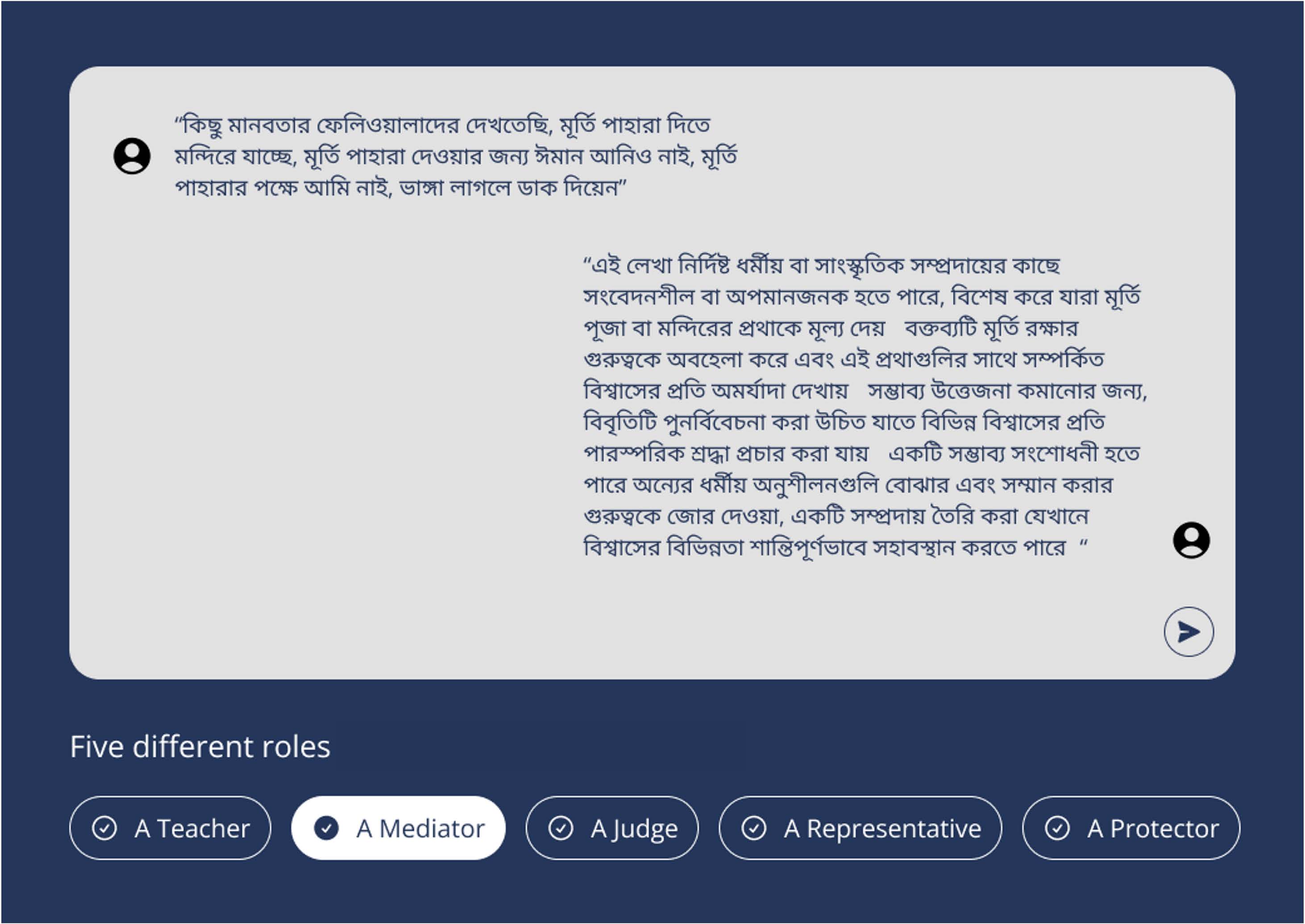 Mod-Guide: An LLM-based Content Moderation Feedback System to Address Insensitive Speech toward Indigenous Ethnic and Religious Minority CommunitiesDipto Das, Achhiya Sultana, Ankit Singh Chauhan, and 5 more authorsIn Proceedings of the ACM SIGCAS/SIGCHI Conference on Computing and Sustainable Societies, Virtual Event, 2026
Language operates as a mechanism of both marginalization and resistance, especially for minority communities navigating insensitive and harmful speech online. As content moderation increasingly depends on large language models (LLMs), concerns arise about whether these systems can recognize culturally insensitive speech–language that disregards or marginalizes the cultural and religious perspectives of historically underrepresented communities, often through implicit erasure, misrepresentation, or normative framing, rather than overt hostility. Focusing on Bangladesh’s Hindu and Chakma communities – the country’s largest religious and Indigenous ethnic minorities, respectively – this paper investigates the epistemic limits of LLM-based moderation systems and explores methods for incorporating minority perspectives. We co-created a culturally grounded corpus of insensitive speech with community members and integrated their narratives into moderation pipelines using retrieval augmented generation (RAG). Our tool, Mod-Guide, improves LLM sensitivity to minority viewpoints by leveraging contextual cues derived from lived experience. Through mixed-method evaluations involving both minority and majority participants, we demonstrate that RAG-enhanced moderation responses are more contextually accurate and perceived differently across ethnic lines. This work advances research in human-computer interaction, AI ethics, and social computing by foregrounding restorative justice and hermeneutical inclusion in the design of content moderation systems.
@inproceedings{das2026modguide, author = {Das, Dipto and Sultana, Achhiya and Chauhan, Ankit Singh and Alam, Saadia Binte and Shidujaman, Mohammad and Guha, Shion and Chakraborty, Sunandan and Ahmed, Syed Ishtiaque}, title = {Mod-Guide: An LLM-based Content Moderation Feedback System to Address Insensitive Speech toward Indigenous Ethnic and Religious Minority Communities}, booktitle = {Proceedings of the ACM SIGCAS/SIGCHI Conference on Computing and Sustainable Societies}, series = {COMPASS '26}, year = {2026}, date = {2026-07-27/2026-07-31}, location = {Virtual Event}, publisher = {Association for Computing Machinery}, address = {New York, NY, USA}, keywords = {Minority, LLM, RAG, content moderation, ethics}, url = {https://doi.org/10.1145/3811242.3819096}, doi = {10.1145/3811242.3819096}, methods = {nlp, quant, qual, tool}, filter_type = {full} } - COMPASS
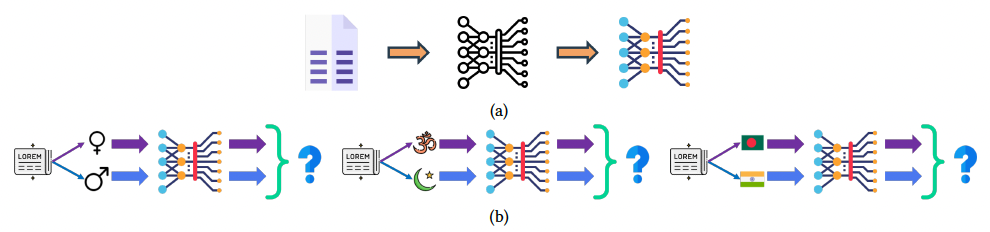 How Do Datasets, Developers, and Models Affect Biases in a Low-Resourced Language?: The Case of the Bengali LanguageDipto Das, Shion Guha, and Bryan SemaanIn Proceedings of the ACM SIGCAS/SIGCHI Conference on Computing and Sustainable Societies, Virtual Event, 2026
Sociotechnical systems, such as language technologies, frequently exhibit identity-based biases. These biases exacerbate the experiences of historically marginalized communities and remain understudied in low-resource contexts. While models and datasets specific to a language or with multilingual support are commonly recommended to address these biases, this paper empirically tests the effectiveness of such approaches for gender, religion, and nationality-based identities in Bengali, a widely spoken but low-resourced language. We conducted an algorithmic audit of sentiment analysis models built on mBERT and BanglaBERT, which were fine-tuned using all Bengali sentiment analysis (BSA) datasets from Google Dataset Search. Our analyses showed that BSA models exhibit biases across different identity categories despite having similar semantic content and structure. We also examined the inconsistencies and uncertainties arising from combining pre-trained models and datasets created by individuals from diverse demographic backgrounds. We connected these findings to the broader discussions on epistemic injustice, AI alignment, and methodological decisions in algorithmic audits.
@inproceedings{das2026datasets, author = {Das, Dipto and Guha, Shion and Semaan, Bryan}, title = {How Do Datasets, Developers, and Models Affect Biases in a Low-Resourced Language?: The Case of the Bengali Language}, booktitle = {Proceedings of the ACM SIGCAS/SIGCHI Conference on Computing and Sustainable Societies}, series = {COMPASS '26}, year = {2026}, date = {2026-07-27/2026-07-31}, location = {Virtual Event}, publisher = {Association for Computing Machinery}, address = {New York, NY, USA}, keywords = {Algorithmic audit, Sentiment analysis, Bias, Datasets, Language models, Identity}, url = {https://doi.org/10.1145/3811242.3819100}, doi = {10.1145/3811242.3819100}, methods = {audit, quant, survey}, filter_type = {full} } - DIS
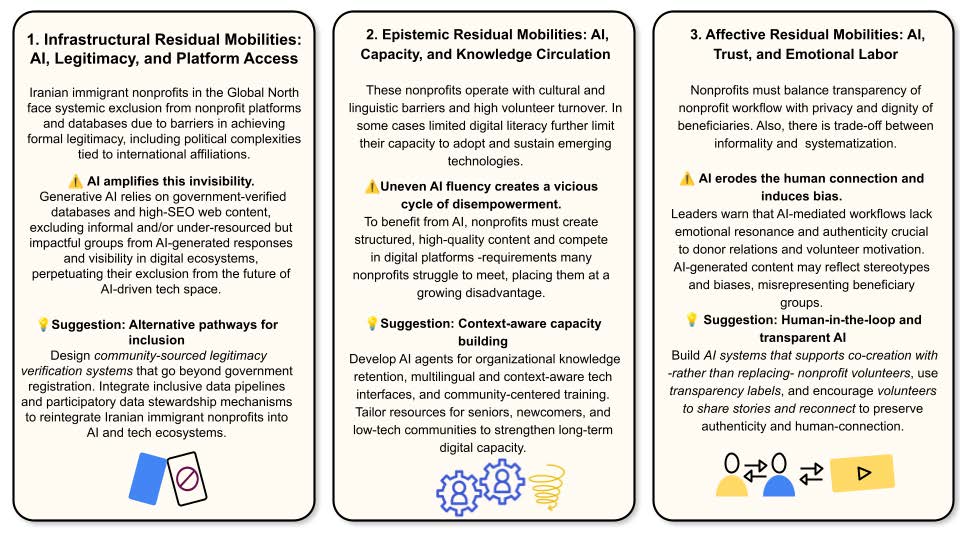 Artificial Intelligence at the Margins: Risks and Opportunities for Iranian Immigrant Nonprofits in the Global NorthMaryam Mokhberi, Dipto Das, Pratyasha Saha, and 2 more authorsIn Proceedings of the 2026 ACM Designing Interactive Systems Conference, Singapore, Jun 2026
Best Paper Honorable Mention
This study investigates how Iranian immigrant nonprofit groups experience exclusion within technology and AI-driven infrastructures. Based on 27 semi-structured interviews, it identifies how legitimacy barriers, capacity gaps, and ethical dilemmas intersect to create a cycle of infrastructural immobility that restricts these groups’ participation in the digital nonprofit ecosystem. The findings reveal that generative AI, while providing some opportunities, risks exacerbating these challenges by deepening marginalization and reinforcing inequalities in access, data visibility, AI fluency, and AI-mediated representation. Uncritical adoption of generative AI in the nonprofit domain undermines transparency and human connection in everyday organizational practice and induces bias in AI-generated content in the context of Iranian immigrant nonprofit work. To address these issues, the paper proposes interaction-level design strategies that promote community-driven inclusion, support context-aware capacity building, and leverage AI’s augmentative potential to strengthen transparency practices and human connection among Iranian immigrant nonprofits.
@inproceedings{mokhberi2026ai, author = {Mokhberi, Maryam and Das, Dipto and Saha, Pratyasha and Ahmed, Syed Ishtiaque and Mim, Nusrat Jahan}, title = {Artificial Intelligence at the Margins: Risks and Opportunities for Iranian Immigrant Nonprofits in the Global North}, year = {2026}, booktitle = {Proceedings of the 2026 ACM Designing Interactive Systems Conference}, series = {DIS '26}, location = {Singapore}, month = jun, publisher = {Association for Computing Machinery}, isbn = {979-8-4007-2563-0/2026/06}, doi = {10.1145/3800645.3812939}, url = {https://doi.org/10.1145/3800645.3812939}, keywords = {Nonprofit, Charity, Artificial Intelligence, AI, LLM, Immigrant, Inclusion, Informality, Digital Literacy, Legitimacy, Mobility, Infrastructure}, filter_type = {full}, methods = {audit, interview, qual} } - FAccT
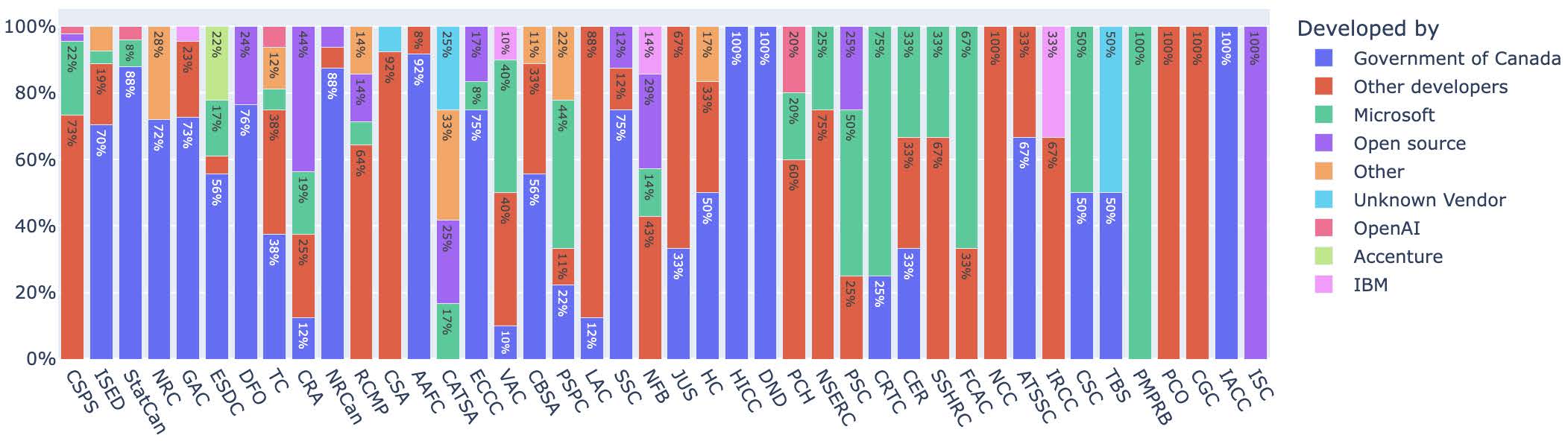 Bureaucratic Silences: What the Canadian AI Register Reveals, Omits, and ObscuresDipto Das, Christelle Tessono, Syed Ishtiaque Ahmed, and 1 more authorIn Proceedings of the 2026 ACM Conference on Fairness, Accountability, and Transparency (FAccT ’26), Montréal, Canada, Jun 2026
In November 2025, the Government of Canada operationalized its commitment to transparency by releasing its first Federal AI Register. In this paper, we argue that such registers are not neutral mirrors of government activity, but active instruments of \textbfontological design that configure the boundaries of accountability. We analyzed the Register’s complete dataset of 409 systems using the Algorithmic Decision-Making Adapted for the Public Sector (ADMAPS) framework, combining quantitative mapping with deductive qualitative coding. Our findings reveal a sharp divergence between the rhetoric of “sovereign AI" and the reality of bureaucratic practice: while 86% of systems are deployed internally for efficiency, the Register systematically obscures the human discretion, training, and uncertainty management required to operate them. By privileging technical descriptions over sociotechnical context, the Register constructs an ontology of AI as “reliable tooling" rather than “contestable decision-making." We conclude that without a shift in design, such transparency artifacts risk automating accountability into a performative compliance exercise, offering visibility without contestability.
@inproceedings{das2026bureaucratic, author = {Das, Dipto and Tessono, Christelle and Ahmed, Syed Ishtiaque and Guha, Shion}, title = {Bureaucratic Silences: What the Canadian AI Register Reveals, Omits, and Obscures}, year = {2026}, month = jun, isbn = {979-8-4007-2596-8/2026/06}, publisher = {Association for Computing Machinery}, address = {New York, NY, USA}, url = {https://doi.org/10.1145/3805689.3812336}, doi = {10.1145/3805689.3812336}, booktitle = {Proceedings of the 2026 ACM Conference on Fairness, Accountability, and Transparency (FAccT '26)}, location = {Montr\'eal, Canada}, series = {FAccT '26}, keywords = {AI Register, Government of Canada, Bureaucracy, Accountability, Transparency}, methods = {cda, quant}, filter_type = {full}, } - FAccT
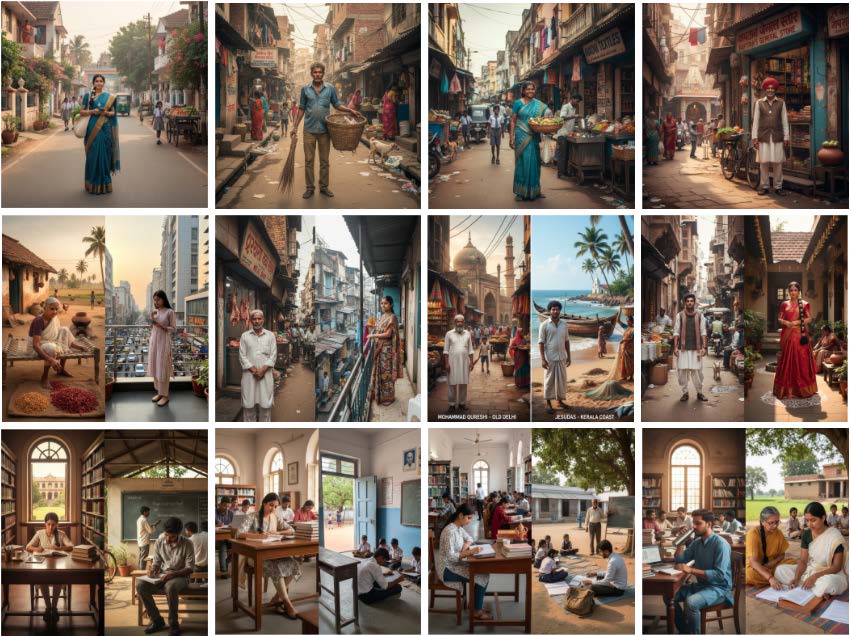 Beyond Categories of Caste: Examining Caste Bias and Morality in Text-to-Image AI ModelsDivyanshu Kumar Singh, Dipto Das, Deepika Rama Subramanian, and 3 more authorsIn Proceedings of the 2026 ACM Conference on Fairness, Accountability, and Transparency, Montréal, Canada, Jun 2026
Text-to-Image (T2I) models have shown promising utility across various domains. However, such models are also amplifying harmful societal biases in their outputs. In the context of South Asia, recent work has shown caste biases and stereotypes are being perpetuated through Generative AI (GenAI) systems. While this research offers extremely relevant insight into invisibilized narratives of caste discrimination through the GenAI system, they often treat caste as an identity category. Therefore, in this work we shift our ontology to focus on the relational aspect of caste. This enables us to develop a more nuanced understanding of the mechanics of caste discrimination by and through T2I models. Combining an algorithmic audit with critical discourse analysis, we draw on a conceptual frame challenging Brahminical Normativity to show how caste biases are perpetuated beyond the simple binaries of upper vs lower-caste categories. Our contributions are two-fold. Beyond challenging the categorical understanding of caste as a category, we propose an anti-caste approach to tackle the issue of caste bias and fairness in AI systems.
@inproceedings{singh2026beyond, author = {Singh, Divyanshu Kumar and Das, Dipto and Subramanian, Deepika Rama and Saha, Koustuv and Voida, Stephen and Semaan, Bryan}, title = {Beyond Categories of Caste: Examining Caste Bias and Morality in Text-to-Image AI Models}, year = {2026}, booktitle = {Proceedings of the 2026 ACM Conference on Fairness, Accountability, and Transparency}, series = {FAccT '26}, location = {Montr{\'e}al, Canada}, month = jun, publisher = {Association for Computing Machinery}, doi = {10.1145/3805689.3806720}, url = {https://doi.org/10.1145/3805689.3806720}, isbn = {979-8-4007-2596-8/2026/06}, filter_type = {full}, methods = {audit, content analysis, qual} } - USENIX Sec
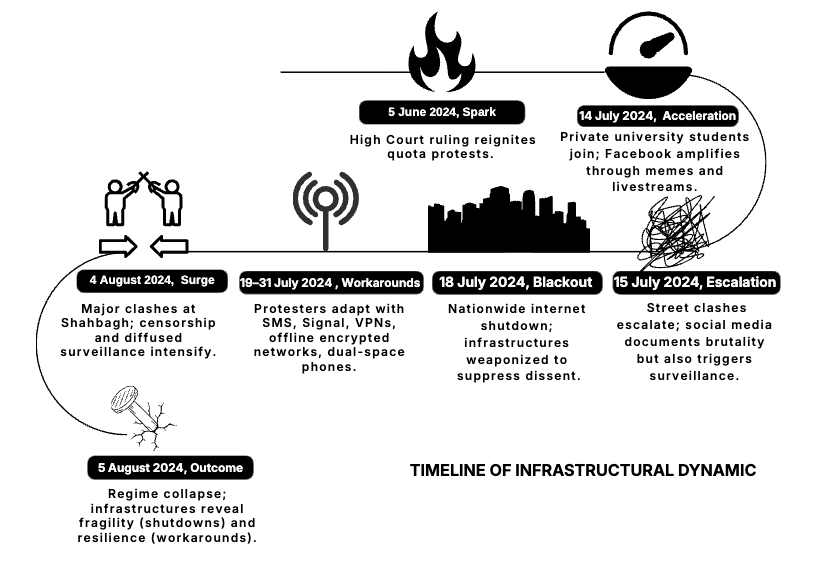 Resilience Amid Diffused Surveillance During a Political Movement in BangladeshMashiyat Mahjabin Eshita, Ishmam Bin Rofi, Md. Sabbir Ahmed, and 5 more authorsIn Proceedings of the 35th USENIX Security Symposium, 2026
In July 2024, Bangladesh witnessed a historic, student-led uprising where social media became both a tool of mobilization and a site of repression. While surveillance is often framed through Bentham’s vertical Panopticon model, our study extends the discourse on lateral surveillance. Drawing on 23 interviews with protesters, activists, and digital organizers, we examine how lateral surveillance operates within a political movement in Bangladesh, where discipline is enacted not only by the state but also through peers, kin, and intimate social ties. Participants described living under constant fear while also developing creative strategies of resilience, from improvised encrypted systems and panic deletions to cultural tactics like satire and hidden speech. We contribute to security and privacy literature on activism by highlighting the need for designs that strengthen safety, anonymity, and collective resilience in fragile and repressive contexts.
@inproceedings{eshita2026resilience, title = {Resilience Amid Diffused Surveillance During a Political Movement in Bangladesh}, author = {Eshita, Mashiyat Mahjabin and Rofi, Ishmam Bin and Ahmed, Md. Sabbir and Das, Dipto and Alam, Md. Golam Rabiul and Noor, Jannatun and Ahmed, Syed Ishtiaque and Haque, S M Taiabul}, booktitle = {Proceedings of the 35th USENIX Security Symposium}, year = {2026}, publisher = {USENIX Association}, address = {Baltimore, MD, USA}, doi = {}, methods = {qual, interviews}, filter_type = {full} } - CanadianAI
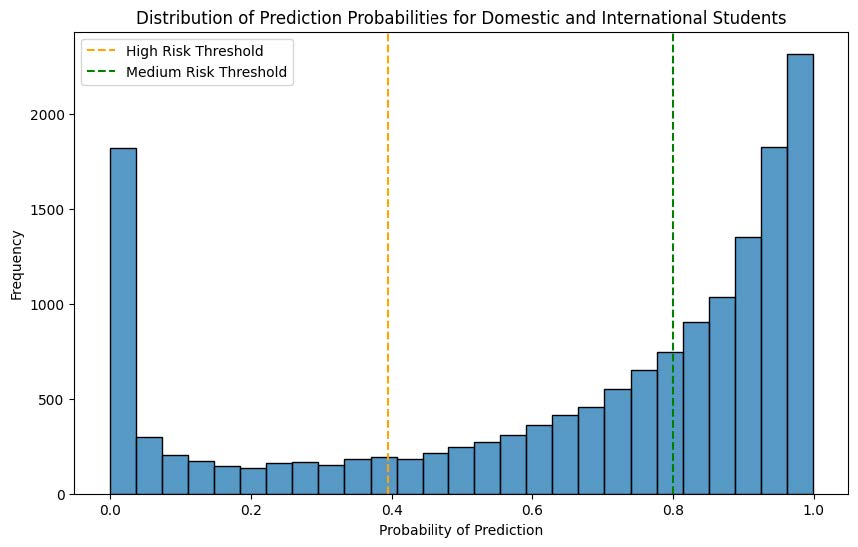 Fairness Audits of Institutional Risk Models in Deployed ML PipelinesKelly McConvey, Dipto Das, Maya Ghai, and 3 more authorsIn Proceedings of the Canadian Conference on Artificial Intelligence, 2026
Fairness audits of institutional risk models are critical for understanding how deployed machine learning pipelines allocate resources. Drawing on multi-year collaboration with Centennial College, where our prior ethnographic work introduced the ASP-HEI Cycle, we present a replica-based audit of a deployed Early Warning System (EWS), replicating its model using institutional training data and design specifications. We evaluate disparities by gender, age, and residency status across the full pipeline (training data, model predictions, and post-processing) using standard fairness metrics. Our audit reveals systematic misallocation: younger, male, and international students are disproportionately flagged for support, even when many ultimately succeed, while older and female students with comparable dropout risk are under-identified. Post-processing amplifies these disparities by collapsing heterogeneous probabilities into percentile-based risk tiers. This work provides a replicable methodology for auditing institutional ML systems and shows how disparities emerge and compound across stages, highlighting the importance of evaluating construct validity alongside statistical fairness. It contributes one empirical thread to a broader program investigating algorithms, student data, and power in higher education.
@inproceedings{mcconvey2026fairness, title = {Fairness Audits of Institutional Risk Models in Deployed ML Pipelines}, author = {McConvey, Kelly and Das, Dipto and Ghai, Maya and Zhai, Angelina and Lee, Rosa and Guha, Shion}, booktitle = {Proceedings of the Canadian Conference on Artificial Intelligence}, year = {2026}, methods = {audit, quant}, filter_type = {short}, doi = {} } - DxConf
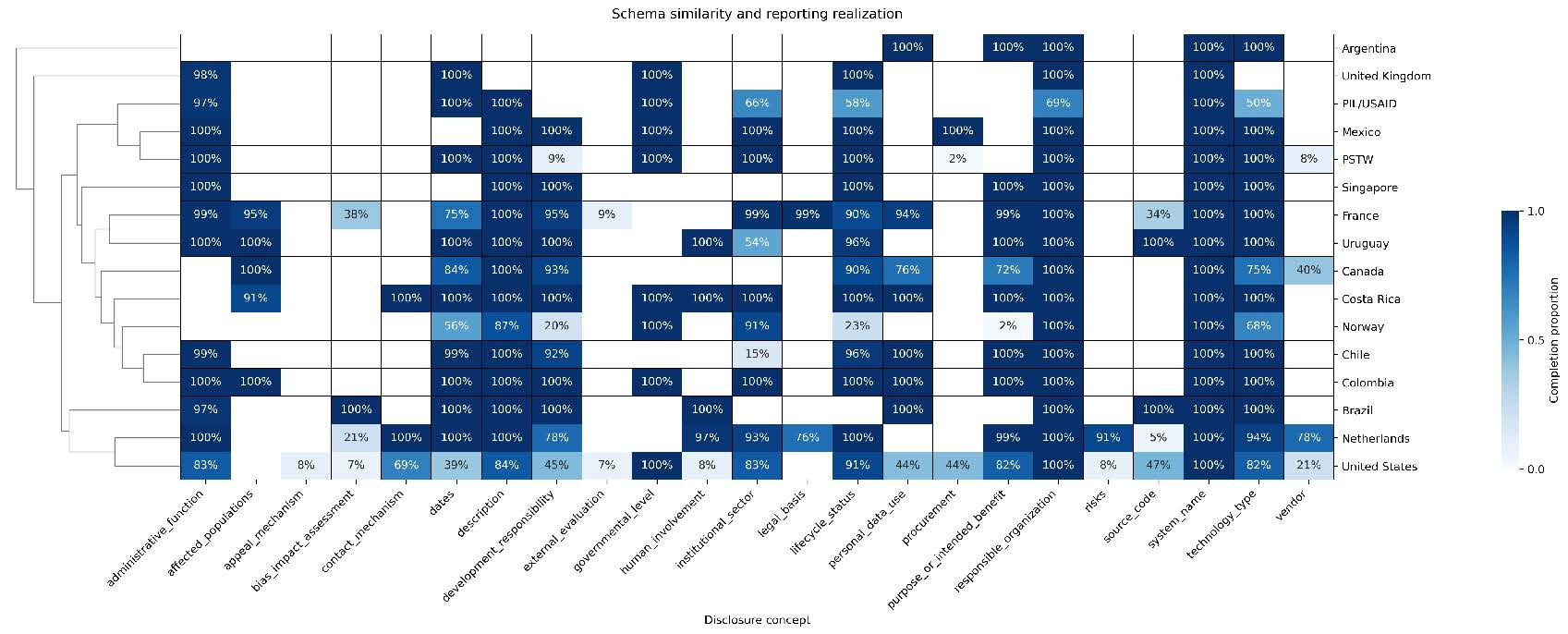 A Global Comparison of Schemas, Transparency, and Interoperability in Public-Sector AI Registers and InventoriesDipto Das and Shion GuhaIn Proceedings of the ACM Conference on Digital Transformation, 2026
Artificial intelligence (AI) registers and inventories are intended to make governmental AI visible, but their institutional scope, schemas, and reporting practices construct different representations of public-sector AI. We compare 8,368 records from country-specific and transnational inventories covering 72 countries. Across 23 harmonized fields, registers shared a descriptive core but rarely requested information about appeals, risks, legal bases, or external evaluation. We found that broad schemas often contained substantial missingness, schema similarity showed no significant patterned convergence, and multiple sources covering the same jurisdictions overlapped only selectively. Based on these findings, we synthesize a \emphlayered visibility framework that shows how register records reflect disclosure arrangements and why interoperability requires shared concepts, clear definitions, and preserved provenance.
@inproceedings{das2026global, author = {Das, Dipto and Guha, Shion}, title = {A Global Comparison of Schemas, Transparency, and Interoperability in Public-Sector AI Registers and Inventories}, booktitle = {Proceedings of the ACM Conference on Digital Transformation}, year = {2026}, doi = {}, methods = {quant}, filter_type = {short} } - CSCW WorkshopCaste and Technology: Interpretations and Explorations in CSCW and BeyondDivyanshu Kumar Singh, Palashi Vaghela, Dipto Das, and 6 more authorsIn Companion Publication of the 2026 Conference on Computer-Supported Cooperative Work and Social Computing, 2026
HCI/CSCW scholarship has actively investigated harms that are perpetuated when historical, political, and social realities are sidelined within techno-scientific development and research. One such emerging site of investigation is caste, where scholars have shown how narratives of casteless-ness are portrayed through lack of engagement with realities of caste in the world of computing. There is emerging work examining the relationship between caste and technology, such as social media and generative AI, but there is little effort to conceptualize caste within HCI/CSCW. While scholars have informally described this site of investigation as ‘Caste Computing’, yet there exists no manifesto as to what it means or what its goals/values are? Therefore, in order to understand and define Caste Computing as a field within HCI/CSCW research, we plan to gather diverse scholars, practitioners, and activists to initiate conversation around four themes: a) what is caste?, b) what is/is not caste computing?, c) what does caste as lens/framework/analytical category looks like to investigate various technologies?, and d) what is the future agenda of caste computing? This workshop provides a platform to complicate and critique the relationship between caste and techno-scientific assemblages to build anti-caste futures.
@inproceedings{10.1145/3785651.3818813, author = {Singh, Divyanshu Kumar and Vaghela, Palashi and Das, Dipto and Chandhiramowuli, Srravya and Yadav, Meenakshi and Qadri, Rida and Rajadesingan, Ashwin and Saha, Koustuv and Semaan, Bryan}, title = {Caste and Technology: Interpretations and Explorations in CSCW and Beyond}, year = {2026}, publisher = {Association for Computing Machinery}, address = {New York, NY, USA}, doi = {10.1145/3785651.3818813}, booktitle = {Companion Publication of the 2026 Conference on Computer-Supported Cooperative Work and Social Computing}, series = {CSCW Companion '26}, filter_type = {workshop} } - CSCW WorkshopAI-Enabled Fraudulent Participation in Human-Subjects ResearchWeijia He, EunJeong Cheon, Chia-Fang Chung, and 5 more authorsIn Companion Publication of the 2026 Conference on Computer-Supported Cooperative Work and Social Computing, 2026
Fraudulent use of AI is increasingly prevalent in human-subjects research, rendering many traditional bot-detection methods ineffective and, consequently, raising significant concerns about data integrity among researchers who work with human-subjects data. Tools are being developed to address concerns about fraudulent participation; however, it remains unclear which best practices to follow for prevention or mitigation, how effective the adopted preventative measures are, and to what extent one can trust the collected data. In this workshop, we will bring together human-computer interaction and social computing researchers to exchange strategies for addressing fraudulent participation, assess the effectiveness of existing detection methods, discuss the potential risks and opportunities of AI in human-centered research, and develop method-specific guidelines for fraud prevention/detection and the research dissemination/review process. The workshop involves full-group activities, breakout discussions divided by research methods, and the production of a draft document summarizing method-specific guidelines that will be shared with the wider CSCW community for feedback. We hope that the conversation started during this workshop will spur deeper engagement from CSCW and the wider SIGCHI research community to implement approaches to minimize the negative impact of AI-enabled fraudulent participation in research.
@inproceedings{10.1145/3785651.3816095,
  author = {He, Weijia and Cheon, EunJeong and Chung, Chia-Fang and Das, Dipto and Kaur, Harmanpreet and Li, Toby Jia-Jun and Vitak, Jessica and Yao, Yaxing},
  title = {AI-Enabled Fraudulent Participation in Human-Subjects Research},
  year = {2026},
  publisher = {Association for Computing Machinery},
  address = {New York, NY, USA},
  doi = {10.1145/3785651.3816095},
  booktitle = {Companion Publication of the 2026 Conference on Computer-Supported Cooperative Work and Social Computing},
  series = {CSCW Companion '26},
  filter_type = {workshop}
}
2025
- CHIThe Power of Language: Resisting Western Heteropatriarchal Normative Writing StandardsDivyanshu Kumar Singh, Dipto Das, and Bryan SemaanIn Proceedings of the 2025 CHI Conference on Human Factors in Computing Systems, Yokohama, Japan, 2025
Language is more than communication; it is a form of power. Whereas science has been scrutinized for privileging Western values and norms, what has been less explored is scientific linguistic performance (e.g. writing). The enforcement of English as the “normative standard” has prioritized hegemonic values and assumptions, thereby shaping the expectations of scientific performance. HCI/CSCW is dominated by heteropatriarchal Western practices, overlooking entangled values and assumptions impacting non-Western colleagues. Our work presents a design fiction (fictitious case study) envisioning a research contribution which embodies non-Western linguistic nuances as an alternative “normative standard” for scientific communication. Through this work, not only are we championing care in developing responsible linguistic practices in HCI/CSCW, but also epistemically challenging readers with intentional confusion. We establish a call to action for acknowledging and embracing different writing practices that are more inclusive of the diverse representation of scholars in HCI/CSCW.
@inproceedings{10.1145/3706598.3714073, author = {Singh, Divyanshu Kumar and Das, Dipto and Semaan, Bryan}, title = {The Power of Language: Resisting Western Heteropatriarchal Normative Writing Standards}, year = {2025}, isbn = {9798400713941}, publisher = {Association for Computing Machinery}, address = {New York, NY, USA}, doi = {10.1145/3706598.3714073}, booktitle = {Proceedings of the 2025 CHI Conference on Human Factors in Computing Systems}, articleno = {491}, numpages = {17}, keywords = {Language, Design Fiction, Coloniality, Human-Computer Interaction, Decolonization, Feminism, People of Color, Power, Justice}, location = {Yokohama, Japan}, series = {CHI '25}, methods = {design, theory}, filter_type = {full} } - CHI
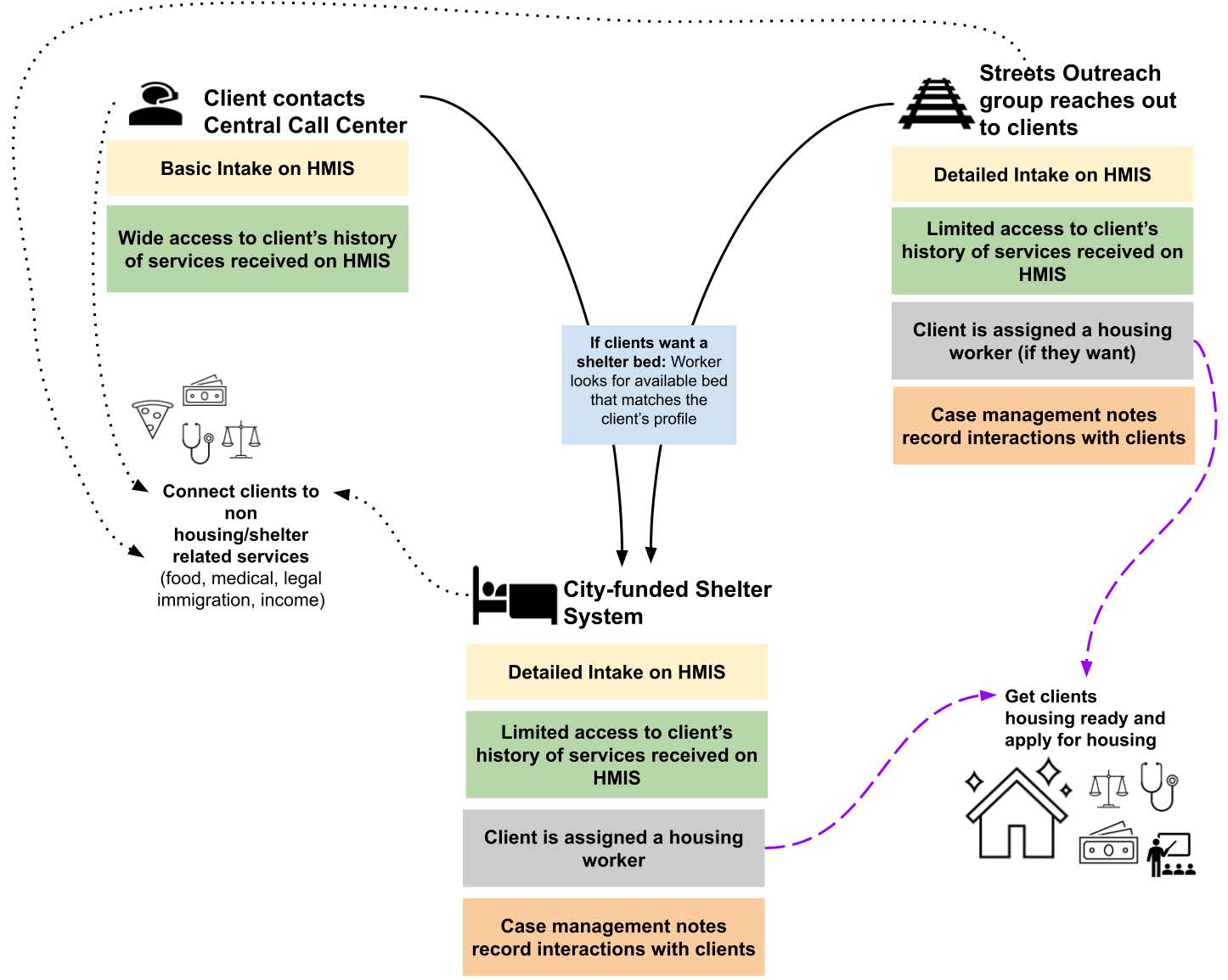 The Datafication of Care in Public Homelessness ServicesErina Seh-Young Moon, Devansh Saxena, Dipto Das, and 1 more authorIn Proceedings of the 2025 CHI Conference on Human Factors in Computing Systems, Yokohama, Japan, 2025
Best Paper Honorable Mention
Homelessness systems in North America adopt coordinated data-driven approaches to efficiently match support services to clients based on their assessed needs and available resources. AI tools are increasingly being implemented to allocate resources, reduce costs and predict risks in this space. In this study, we conducted an ethnographic case study on the City of Toronto’s homelessness system’s data practices across different critical points. We show how the City’s data practices offer standardized processes for client care but frontline workers also engage in heuristic decision-making in their work to navigate uncertainties, client resistance to sharing information, and resource constraints. From these findings, we show the temporality of client data which constrain the validity of predictive AI models. Additionally, we highlight how the City adopts an iterative and holistic client assessment approach which contrasts to commonly used risk assessment tools in homelessness, providing future directions to design holistic decision-making tools for homelessness.
@inproceedings{10.1145/3706598.3713232, author = {Moon, Erina Seh-Young and Saxena, Devansh and Das, Dipto and Guha, Shion}, title = {The Datafication of Care in Public Homelessness Services}, year = {2025}, isbn = {9798400713941}, publisher = {Association for Computing Machinery}, address = {New York, NY, USA}, doi = {10.1145/3706598.3713232}, booktitle = {Proceedings of the 2025 CHI Conference on Human Factors in Computing Systems}, articleno = {829}, numpages = {16}, keywords = {algorithmic decision-making, algorithmic bias, risk assessments, homelessness, public sector}, location = {Yokohama, Japan}, series = {CHI '25}, methods = {ethnography, qual}, filter_type = {full} } - CSCWResidual Mobilities and Religious Practices: Exploring the Experiences of the Hindu Migrants in CanadaAnanya Bhattacharjee, Mohammad Rashidujjaman Rifat, Dipto Das, and 2 more authorsProc. ACM Hum.-Comput. Interact., May 2025
Informed by the previous HCI and CSCW scholarship on residual mobility – a concept that transcends mere geographical relocation to encompass socio-cultural and communal disruptions – this study probes the unique religious and spiritual challenges faced by the Hindu migrants from the Indian subcontinent in Canada. Through interviews with 20 participants, we investigate the role of technology in navigating a diverse religious landscape in professional environments, coping with changing religious materiality, and passing down traditions to the next generation. Our work identifies the community’s proactive use of social media and videoconferencing for religious festivals and connection with their religious community. The findings raise several implications for CSCW research on supporting residual mobility experiences of the Hindu migrants, including effective organization of religious event information, virtual support for material aspects of religious rituals, and fostering online environments that enable pluralistic spiritual engagement.
@article{10.1145/3711057, author = {Bhattacharjee, Ananya and Rifat, Mohammad Rashidujjaman and Das, Dipto and Haque, S M Taiabul and Ahmed, Syed Ishtiaque}, title = {Residual Mobilities and Religious Practices: Exploring the Experiences of the Hindu Migrants in Canada}, year = {2025}, issue_date = {May 2025}, publisher = {Association for Computing Machinery}, address = {New York, NY, USA}, volume = {9}, number = {2}, doi = {10.1145/3711057}, journal = {Proc. ACM Hum.-Comput. Interact.}, month = may, articleno = {CSCW159}, numpages = {30}, keywords = {hindu, migration, religion, residual mobility, social media}, methods = {ethnography, qual}, filter_type = {full} } - ICTD
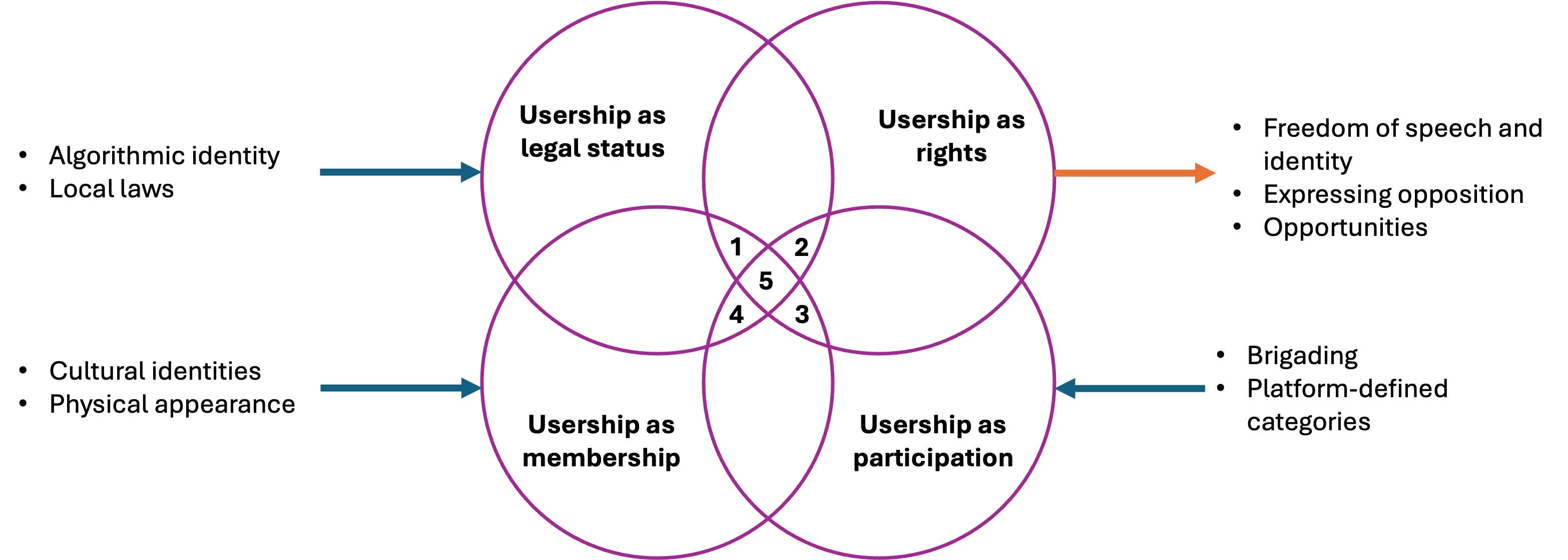 A Civics-oriented Approach to Understanding Intersectionally Marginalized Users’ Experience with Hate Speech OnlineDipto Das*, Achhiya Sultana*, Saadia Binte Alam, and 2 more authorsIn Proceedings of the 13th International Conference on Information & Communication Technologies and Development, Kenya, 2025
While content moderation in online platforms marginalizes users in the Global South at large, users of certain identities are further marginalized. Such users often come from Indigenous ethnic minority groups or identify as women. Through a qualitative study based on 18 semi-structured interviews, this paper explores how such users’ experiences with hate speech online in Bangladesh are shaped by their intersectional identities. Through a civics-oriented approach, we examined the spectrum of their legal status, membership, rights, and participation as users of online platforms. Drawing analogies with the concept of citizenship, we develop the concept of usership that offers a user-centered metaphor in studying moderation and platform governance.
@inproceedings{10.1145/3700794.3700802, author = {Das, Dipto and Sultana, Achhiya and Alam, Saadia Binte and Shidujaman, Mohammad and Ahmed, Syed Ishtiaque}, title = {A Civics-oriented Approach to Understanding Intersectionally Marginalized Users' Experience with Hate Speech Online}, year = {2025}, isbn = {9798400710414}, publisher = {Association for Computing Machinery}, address = {New York, NY, USA}, doi = {10.1145/3700794.3700802}, booktitle = {Proceedings of the 13th International Conference on Information \& Communication Technologies and Development}, pages = {57–68}, numpages = {12}, keywords = {Adivasi, Bangladesh, civics}, location = {Kenya}, series = {ICTD '24}, methods = {interview, online, qual}, filter_type = {full} } - IJCNLP/AACL BHASHA
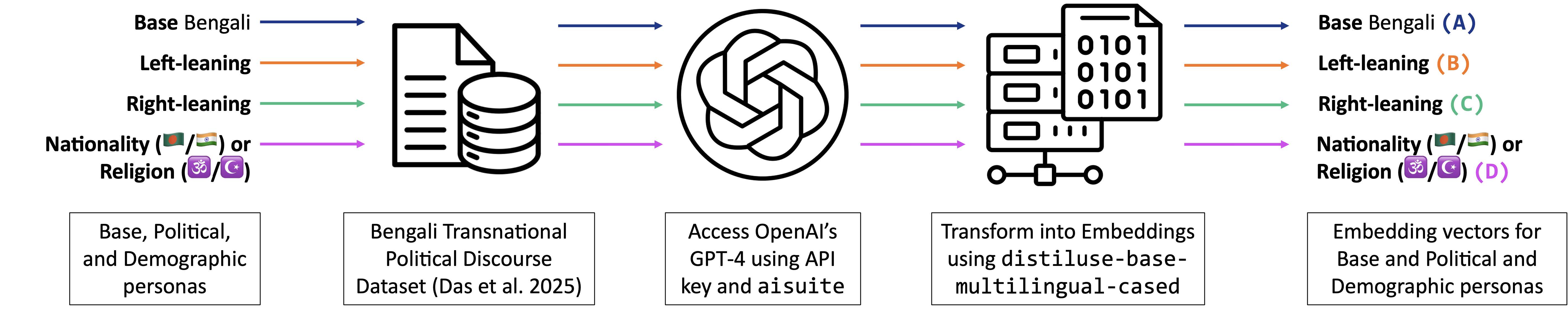 Auditing Political Bias in Text Generation by GPT-4 using Sociocultural and Demographic Personas: Case of Bengali Ethnolinguistic CommunitiesDipto Das, Syed Ishtiaque Ahmed, and Shion GuhaIn Proceedings of the 1st Workshop on Benchmarks, Harmonization, Annotation, and Standardization for Human-Centric AI in Indian Languages, co-located with International Joint Conference on Natural Language Processing & Asia-Pacific Chapter of the Association for Computational Linguistics, Dec 2025
Though large language models (LLMs) are increasingly used in multilingual contexts, their political and sociocultural biases in low-resource languages remain critically underexplored. In this paper, we investigate how LLM-generated texts in Bengali shift in response to personas with varying political orientations (left vs. right), religious identities (Hindu vs. Muslim), and national affiliations (Bangladeshi vs. Indian). In a quasi-experimental study, we simulate these personas and prompt an LLM to respond to political discussions. Measuring the shifts relative to responses for a baseline Bengali persona, we examined how political orientation influences LLM outputs, how topical association shape the political leanings of outputs, and how demographic persona-induced changes align with differently politically oriented variations. Our findings highlight left-leaning political bias in Bengali text generation and its significant association with Muslim sociocultural and demographic identity. We also connect our findings with broader discussions around emancipatory politics, epistemological considerations, and alignment of multilingual models.
@inproceedings{das-etal-2025-auditing, title = {Auditing Political Bias in Text Generation by {GPT}-4 using Sociocultural and Demographic Personas: Case of {B}engali Ethnolinguistic Communities}, author = {Das, Dipto and Ahmed, Syed Ishtiaque and Guha, Shion}, editor = {Bhattacharya, Arnab and Goyal, Pawan and Ghosh, Saptarshi and Ghosh, Kripabandhu}, booktitle = {Proceedings of the 1st Workshop on Benchmarks, Harmonization, Annotation, and Standardization for Human-Centric AI in Indian Languages, co-located with International Joint Conference on Natural Language Processing & Asia-Pacific Chapter of the Association for Computational Linguistics}, series = {BHASHA 2025}, month = dec, year = {2025}, address = {Mumbai, India}, publisher = {Association for Computational Linguistics}, url = {https://aclanthology.org/2025.bhasha-1.3/}, doi = {10.18653/v1/2025.bhasha-1.3}, pages = {23--36}, isbn = {979-8-89176-313-5}, methods = {audit, nlp, quant}, filter_type = {full} } - JCSCW
 Identity Alignment and the Sociotechnical Reconfigurations of Emotional Labor in Transnational Gig-education PlatformsBen Zefeng Zhang, Dipto Das, and Bryan SemaanComputer Supported Cooperative Work (CSCW), 2025
@article{zhang2025identity, title = {Identity Alignment and the Sociotechnical Reconfigurations of Emotional Labor in Transnational Gig-education Platforms}, author = {Zhang, Ben Zefeng and Das, Dipto and Semaan, Bryan}, journal = {Computer Supported Cooperative Work (CSCW)}, volume = {34}, number = {2}, pages = {515--560}, year = {2025}, publisher = {Springer}, doi = {10.1007/s10606-025-09516-2}, methods = {online, interview, qual}, filter_type = {full} } - TOCHITransphobia Is in the Eye of the Prompter: Trans-Centered Perspectives on Large Language ModelsMorgan Klaus Scheuerman, Katy Weathington, Adrian Petterson, and 4 more authorsACM Trans. Comput.-Hum. Interact., Oct 2025
Large language models (LLMs) are the new hot trend being rapidly integrated into products and services—often, in chatbots. LLM-powered chatbots are expected to respond to any number of topics, including topics central to gender identity. In light of rising anti-trans discourse, we examined how two popular LLMs responded to real-world English-language questions about trans identity taken from Quora. We employed reflexive analysis that centered our situated knowledges of the trans community. We found that LLMs return pro-trans responses, even when presented with highly transphobic user prompts. While we also found highly transphobic LLM responses, we found that anti-trans sentiment in LLMs was often subtle, requiring a deep positional understanding from diverse trans stakeholders to interpret. Based on these findings, we recommend diverging from current “value-neutral” approaches that validate transphobia by taking an “all sides” approach. We provide considerations for both the evaluation and design of LLMs that center positional expertise.
@article{10.1145/3743676, author = {Scheuerman, Morgan Klaus and Weathington, Katy and Petterson, Adrian and Doyle, Dylan Thomas and Das, Dipto and DeVito, Michael Ann and Brubaker, Jed R.}, title = {Transphobia Is in the Eye of the Prompter: Trans-Centered Perspectives on Large Language Models}, year = {2025}, issue_date = {October 2025}, publisher = {Association for Computing Machinery}, address = {New York, NY, USA}, volume = {32}, number = {5}, issn = {1073-0516}, doi = {10.1145/3743676}, journal = {ACM Trans. Comput.-Hum. Interact.}, month = oct, articleno = {52}, numpages = {42}, keywords = {Generative AI, LLMs, chatbots, transgender issues, identity, positionality}, methods = {audit, nlp, qual, quant}, filter_type = {full} } - CSCW Poster
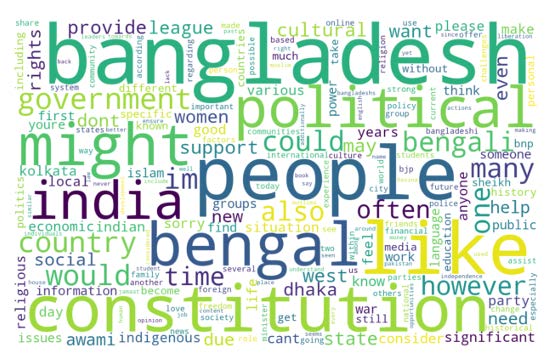 BTPD: A Multilingual Hand-curated Dataset of Bengali Transnational Political Discourse Across Online CommunitiesDipto Das, Syed Ishtiaque Ahmed, and Shion GuhaIn Companion Publication of the 2025 Conference on Computer-Supported Cooperative Work and Social Computing, Bergen, Norway, 2025
Understanding political discourse in online spaces is crucial for analyzing public opinion and ideological polarization. While social computing and computational linguistics have explored such discussions in English, such research efforts are significantly limited in major yet under-resourced languages like Bengali due to the unavailability of datasets. In this paper, we present a multilingual dataset of Bengali transnational political discourse (BTPD) collected from three online platforms, each representing distinct community structures and interaction dynamics. Besides describing how we hand-curated the dataset through community-informed keyword-based retrieval, this paper also provides a general overview of its topics and multilingual content.
@inproceedings{10.1145/3715070.3749223,
  author = {Das, Dipto and Ahmed, Syed Ishtiaque and Guha, Shion},
  title = {BTPD: A Multilingual Hand-curated Dataset of Bengali Transnational Political Discourse Across Online Communities},
  year = {2025},
  isbn = {9798400714801},
  publisher = {Association for Computing Machinery},
  address = {New York, NY, USA},
  doi = {10.1145/3715070.3749223},
  booktitle = {Companion Publication of the 2025 Conference on Computer-Supported Cooperative Work and Social Computing},
  pages = {188–193},
  numpages = {6},
  keywords = {Bengali, Political Discourse, Dataset, Quora, Stack Exchange, Reddit},
  location = {Bergen, Norway},
  series = {CSCW Companion '25},
  methods = {dataset, nlp},
  filter_type = {short}
}
2024
- CHI
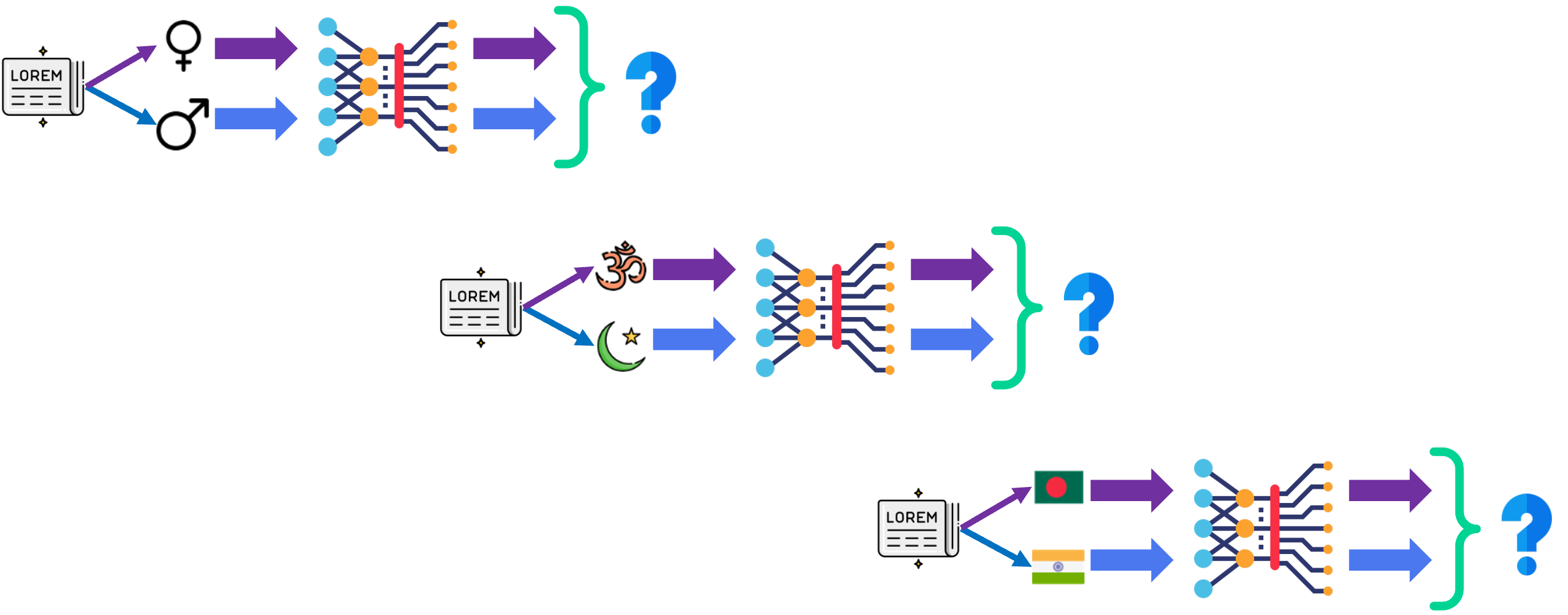 The “Colonial Impulse" of Natural Language Processing: An Audit of Bengali Sentiment Analysis Tools and Their Identity-based BiasesDipto Das, Shion Guha, Jed R. Brubaker, and 1 more authorIn Proceedings of the 2024 CHI Conference on Human Factors in Computing Systems, Honolulu, HI, USA, 2024
While colonization has sociohistorically impacted people’s identities across various dimensions, those colonial values and biases continue to be perpetuated by sociotechnical systems. One category of sociotechnical systems–sentiment analysis tools–can also perpetuate colonial values and bias, yet less attention has been paid to how such tools may be complicit in perpetuating coloniality, although they are often used to guide various practices (e.g., content moderation). In this paper, we explore potential bias in sentiment analysis tools in the context of Bengali communities who have experienced and continue to experience the impacts of colonialism. Drawing on identity categories most impacted by colonialism amongst local Bengali communities, we focused our analytic attention on gender, religion, and nationality. We conducted an algorithmic audit of all sentiment analysis tools for Bengali, available on the Python package index (PyPI) and GitHub. Despite similar semantic content and structure, our analyses showed that in addition to inconsistencies in output from different tools, Bengali sentiment analysis tools exhibit bias between different identity categories and respond differently to different ways of identity expression. Connecting our findings with colonially shaped sociocultural structures of Bengali communities, we discuss the implications of downstream bias of sentiment analysis tools.
@inproceedings{10.1145/3613904.3642669, author = {Das, Dipto and Guha, Shion and Brubaker, Jed R. and Semaan, Bryan}, title = {The ``Colonial Impulse" of Natural Language Processing: An Audit of Bengali Sentiment Analysis Tools and Their Identity-based Biases}, year = {2024}, isbn = {9798400703300}, publisher = {Association for Computing Machinery}, address = {New York, NY, USA}, doi = {10.1145/3613904.3642669}, booktitle = {Proceedings of the 2024 CHI Conference on Human Factors in Computing Systems}, articleno = {769}, numpages = {18}, keywords = {Algorithmic audit, Bias, Colonial, Identity, Sentiment analysis tools}, location = {Honolulu, HI, USA}, series = {CHI '24}, methods = {audit, nlp, survey, quant}, filter_type = {full} } - CSCW
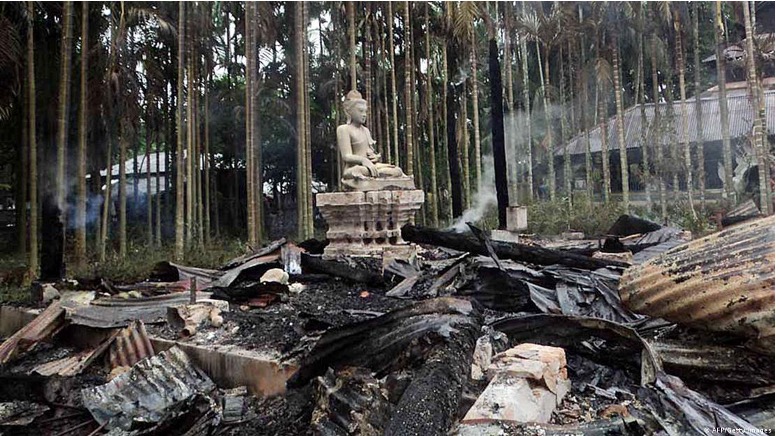 The Politics of Fear and the Experience of Bangladeshi Religious Minority Communities Using Social Media PlatformsDipto Das*, Mohammad Rashidujjaman Rifat*, Arpon Podder, and 4 more authorsProc. ACM Hum.-Comput. Interact., Nov 2024
Despite significant research on online harm, polarization, public deliberation, and justice, CSCW still lacks a comprehensive understanding of the experiences of religious minorities, particularly in relation to fear, as prominently evident in our study. Gaining faith-sensitive insights into the expression, participation, and inter-religious interactions on social media can contribute to CSCW’s literature on online safety and interfaith communication. In pursuit of this goal, we conducted a six-month-long, interview-based study with the Hindu, Buddhist, and Indigenous communities in Bangladesh. Our study draws on an extensive body of research encompassing the spiral of silence, the cultural politics of fear, and communication accommodation to examine how social media use by religious minorities is influenced by fear, which is associated with social conformity, misinformation, stigma, stereotypes, and South Asian postcolonial memory. Moreover, we engage with scholarly perspectives from religious studies, justice, and South Asian violence and offer important critical insights and design lessons for the CSCW literature on public deliberation, justice, and interfaith communication.
@article{10.1145/3686926, author = {Das, Dipto and Rifat, Mohammad Rashidujjaman and Podder, Arpon and Jannat, Mahiratul and Soden, Robert and Semaan, Bryan and Ahmed, Syed Ishtiaque}, title = {The Politics of Fear and the Experience of Bangladeshi Religious Minority Communities Using Social Media Platforms}, year = {2024}, issue_date = {November 2024}, publisher = {Association for Computing Machinery}, address = {New York, NY, USA}, volume = {8}, number = {CSCW2}, doi = {10.1145/3686926}, journal = {Proc. ACM Hum.-Comput. Interact.}, month = nov, articleno = {387}, numpages = {32}, keywords = {fear, interfaith, minority, peace, religion, restorative justice, social media}, methods = {interview, online, qual}, filter_type = {full} } - CSCW
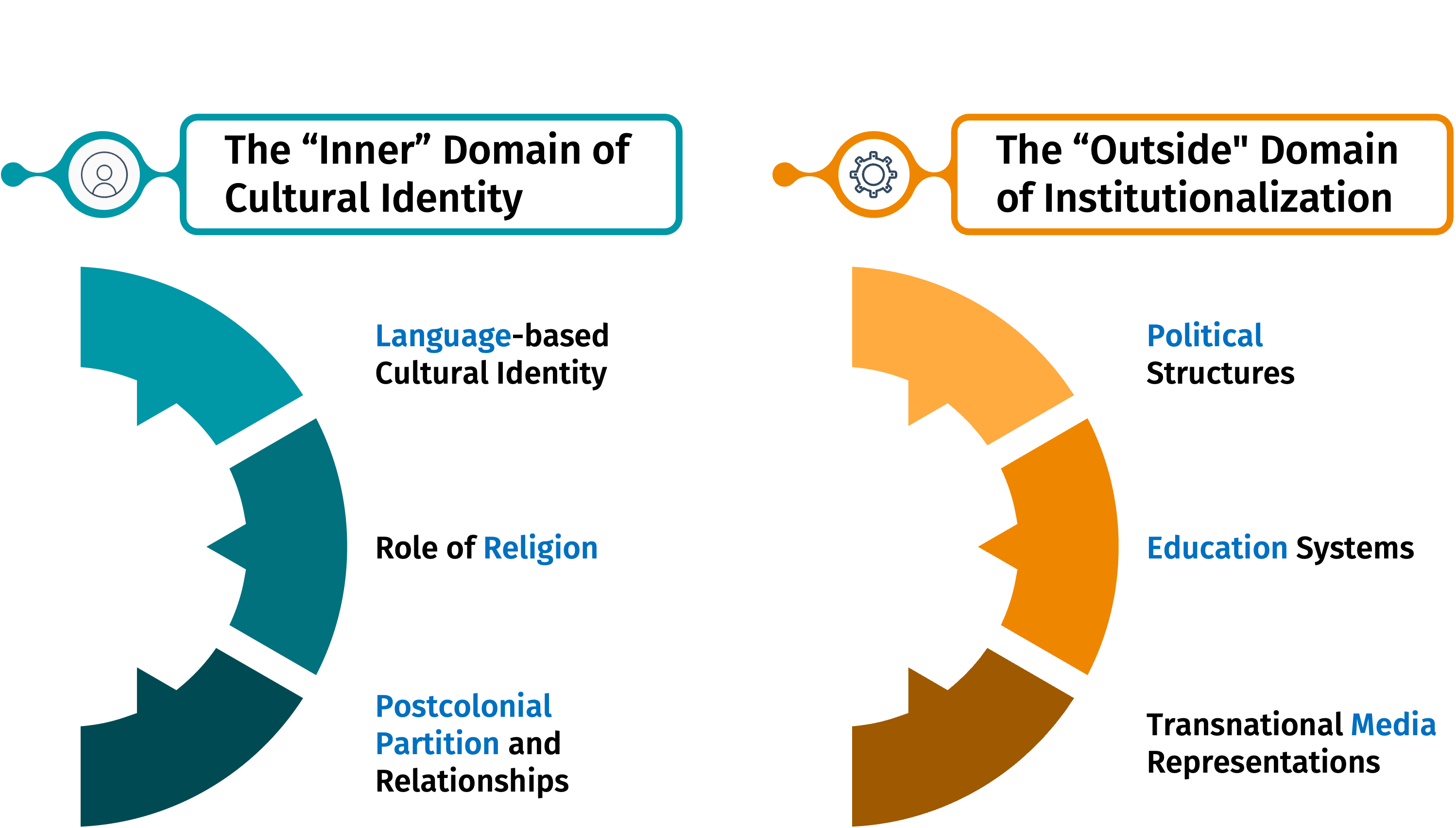 Reimagining Communities through Transnational Bengali Decolonial Discourse with YouTube Content CreatorsDipto Das, Dhwani Gandhi, and Bryan SemaanProc. ACM Hum.-Comput. Interact., Nov 2024
Colonialism–the policies and practices wherein a foreign body imposes its ways of life on local communities–has historically impacted how collectives perceive themselves in relation to others. One way colonialism has impacted how people see themselves is through nationalism, where nationalism is often understood through shared language, culture, religion, and geopolitical borders. The way colonialism has shaped people’s experiences with nationalism has shaped historical conflicts between members of different nation-states for a long time. While recent social computing research has studied how colonially marginalized people can engage in discourse to decolonize or re-imagine and reclaim themselves and their communities on their own terms–what is less understood is how technology can better support decolonial discourses in an effort to re-imagine nationalism. To understand this phenomenon, this research draws on a semi-structured interview study with YouTubers who make videos about culturally Bengali people whose lives were upended as a product of colonization and are now dispersed across Bangladesh, India, and Pakistan. This research seeks to understand people’s motivations and strategies for engaging in video-mediated decolonial discourse in transnational contexts. We discuss how our work demonstrates the potential of the sociomateriality of decolonial discourse online and extends an invitation to foreground complexities of nationalism in social computing research.
@article{10.1145/3686900, author = {Das, Dipto and Gandhi, Dhwani and Semaan, Bryan}, title = {Reimagining Communities through Transnational Bengali Decolonial Discourse with YouTube Content Creators}, year = {2024}, issue_date = {November 2024}, publisher = {Association for Computing Machinery}, address = {New York, NY, USA}, volume = {8}, number = {CSCW2}, doi = {10.1145/3686900}, journal = {Proc. ACM Hum.-Comput. Interact.}, month = nov, articleno = {361}, numpages = {36}, keywords = {YouTube, content creators, decolonial, nationalism, the global south}, methods = {interview, online, qual}, filter_type = {full} } - PhD Dissertation
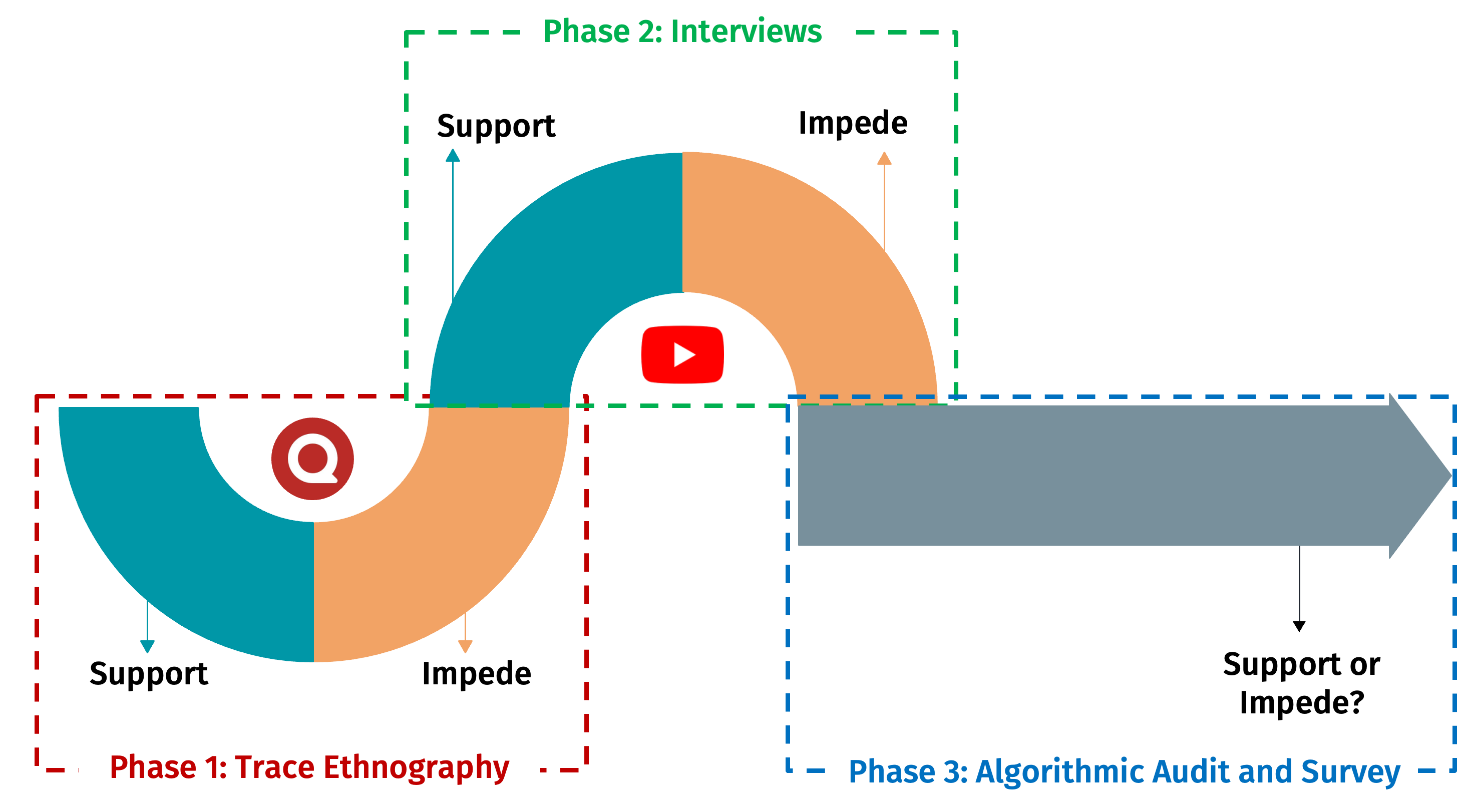 Identity Decolonization amid the Coloniality of ComputingDipto DasUniversity of Colorado at Boulder, 2024
@phdthesis{das2024identity, title = {Identity Decolonization amid the Coloniality of Computing}, author = {Das, Dipto}, year = {2024}, school = {University of Colorado at Boulder}, filter_type = {thesis} } - EASST-4SIdentity Alignment and the Sociotechnical Reconfigurations of Emotional Labor in Transnational Gig-education PlatformsBen Zefeng Zhang, Dipto Das, and Bryan SemaanIn Quadrennial Joint Meeting of the European Association for the Study of Science and Technology and the Society for Social Studies of Science, 2024
- Northeast HCIReligion, Faith and Spirituality, Secularism, Disciplinary ParadigmsMohammad Rashidujjaman Rifat, Dipto Das, Dylan Thomas Doyle, and 7 more authorsIn Northeast HCI Meeting, 2024
- CSCW WorkshopHCI, Mobility Justice, and Migration in the Face of Climate CrisisLouisa Kayah Williams, Rayan Awad Alim, Vishal Sharma, and 9 more authorsIn Companion Publication of the 2024 Conference on Computer-Supported Cooperative Work and Social Computing, San Jose, Costa Rica, 2024
This one-day in-person workshop invites together scholars from the CSCW community with expertise in immigration and displacement, climate change and sustainability, and/or mobility justice to consider the challenge of climate migration and how we, as a community, might respond. We draw from previous workshops on migration and displacement in CSCW and HCI, as well as draw in researchers from other related areas, e.g., ICTD, development scholarship, and sustainability sciences. In this workshop, participants aim to engage in an array of activities such as concept mapping, archival creation, research proposal ideation and presentations. Outcomes will include the development of a community of scholars working at the nexus of these crises, common understanding of relevant concepts and themes, and a shared research agenda to guide future work.
@inproceedings{10.1145/3678884.3681830,
  author = {Williams, Louisa Kayah and Awad Alim, Rayan and Sharma, Vishal and Talhouk, Reem and Wong-Villacr\'{e}s, Marisol and Kirabo, Lynn and Harris, Tajanae and Das, Dipto and Maitland, Carleen and Semaan, Bryan and Ahmed, Syed Ishtiaque and Soden, Robert},
  title = {HCI, Mobility Justice, and Migration in the Face of Climate Crisis},
  year = {2024},
  isbn = {9798400711145},
  publisher = {Association for Computing Machinery},
  address = {New York, NY, USA},
  doi = {10.1145/3678884.3681830},
  booktitle = {Companion Publication of the 2024 Conference on Computer-Supported Cooperative Work and Social Computing},
  pages = {744–747},
  numpages = {4},
  keywords = {climate change, climate justice, datafication, migration, mobility justice, refugees, sustainable hci},
  location = {San Jose, Costa Rica},
  series = {CSCW Companion '24},
  filter_type = {workshop}
}
2023
- EACL C3NLP
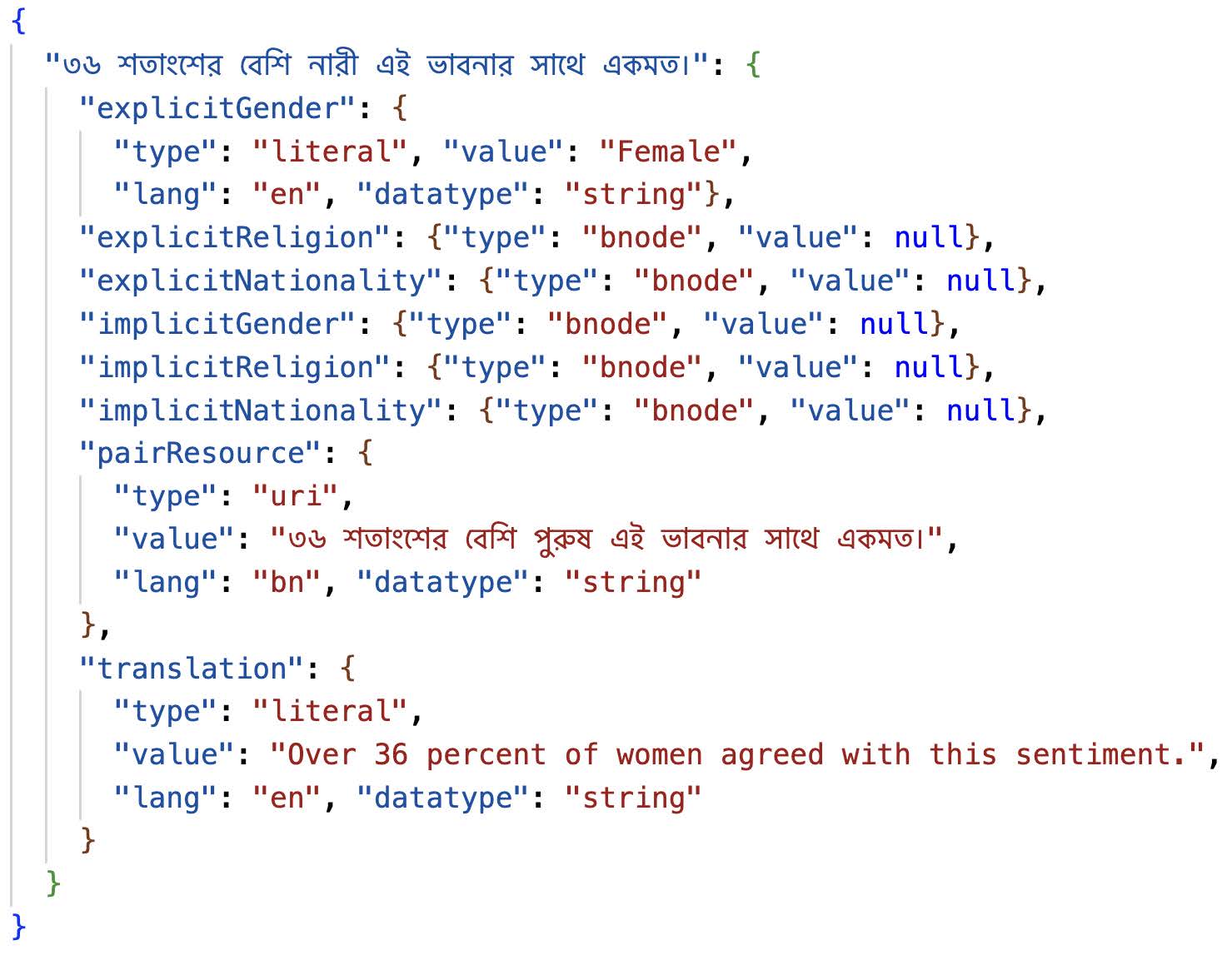 Toward Cultural Bias Evaluation Datasets: The Case of Bengali Gender, Religious, and National IdentityDipto Das, Shion Guha, and Bryan SemaanIn Proceedings of the First Workshop on Cross-Cultural Considerations in NLP, co-located with European Chapter of the Association for Computational Linguistics, May 2023
Critical studies found NLP systems to bias based on gender and racial identities. However, few studies focused on identities defined by cultural factors like religion and nationality. Compared to English, such research efforts are even further limited in major languages like Bengali due to the unavailability of labeled datasets. This paper describes a process for developing a bias evaluation dataset highlighting cultural influences on identity. We also provide a Bengali dataset as an artifact outcome that can contribute to future critical research.
@inproceedings{das-etal-2023-toward, title = {Toward Cultural Bias Evaluation Datasets: The Case of {B}engali Gender, Religious, and National Identity}, author = {Das, Dipto and Guha, Shion and Semaan, Bryan}, editor = {Dev, Sunipa and Prabhakaran, Vinodkumar and Adelani, David Ifeoluwa and Hovy, Dirk and Benotti, Luciana}, booktitle = {Proceedings of the First Workshop on Cross-Cultural Considerations in NLP, co-located with European Chapter of the Association for Computational Linguistics}, series = {C3NLP}, month = may, year = {2023}, address = {Dubrovnik, Croatia}, publisher = {Association for Computational Linguistics}, url = {https://aclanthology.org/2023.c3nlp-1.8/}, doi = {10.18653/v1/2023.c3nlp-1.8}, pages = {68--83}, methods = {dataset, nlp}, filter_type = {full} } - CSCW DCStudying Multi-dimensional Marginalization of Identity from Decolonial and Postcolonial PerspectivesDipto DasIn Companion Publication of the 2023 Conference on Computer Supported Cooperative Work and Social Computing, Minneapolis, MN, USA, 2023
My research contributes to understanding how colonialism marginalized people in the Global South across various dimensions of identity (e.g., race, gender, sexuality, religion, caste, nationality), how sociotechnical systems reinstate colonial structures and values, and how computing platforms both support and impede colonially marginalized communities’ identity expression and performances. Building on decolonial and postcolonial perspectives with a historicist sensibility, my mixed-method empirical studies on various sites (e.g., Quora, YouTube) highlight users’ agency, the role of content moderation, algorithms, and online communities in the inclusion of culturally diverse native Bengali identities. In doing so, my work informs the broader social computing literature on identity, content moderation, fairness and bias, social justice, and ICTD.
@inproceedings{10.1145/3584931.3608920, author = {Das, Dipto}, title = {Studying Multi-dimensional Marginalization of Identity from Decolonial and Postcolonial Perspectives}, year = {2023}, isbn = {9798400701290}, publisher = {Association for Computing Machinery}, address = {New York, NY, USA}, doi = {10.1145/3584931.3608920}, booktitle = {Companion Publication of the 2023 Conference on Computer Supported Cooperative Work and Social Computing}, pages = {437–440}, numpages = {4}, keywords = {decolonial, identity, marginalization, online communities, postcolonial}, location = {Minneapolis, MN, USA}, series = {CSCW '23 Companion}, methods = {online, nlp, mixed}, filter_type = {short} } - GROUP DCDecolonization through Technology and Decolonization of TechnologyDipto DasIn Companion Proceedings of the 2023 ACM International Conference on Supporting Group Work, Hilton Head, SC, USA, 2023
Through colonialism, external forces can alter and shift social structures and practices, thus, profoundly marginalizing the collective identities of local and indigenous populations. Decolonization is the undoing of the impacts of colonial domination. While sociotechnical systems (e.g., online platforms) can support the identity work of such marginalized communities, scholars have also discussed how these systems impose values and exhibit colonial impulses. By employing a mixed method approach, I am interested in understanding how the previously colonized Bengali people decolonize their identities on online platforms; how the designs of these platforms support and impede their identity work and expression–to develop decolonial designs for postcolonial cultural contexts.
@inproceedings{10.1145/3565967.3571754, author = {Das, Dipto}, title = {Decolonization through Technology and Decolonization of Technology}, year = {2023}, isbn = {9781450399456}, publisher = {Association for Computing Machinery}, address = {New York, NY, USA}, doi = {10.1145/3565967.3571754}, booktitle = {Companion Proceedings of the 2023 ACM International Conference on Supporting Group Work}, pages = {51–53}, numpages = {3}, keywords = {Online spaces, Identity, Design, Decolonization, Colonialism}, location = {Hilton Head, SC, USA}, series = {GROUP '23}, methods = {online, nlp, mixed}, filter_type = {short} } - CHI WorkshopHCI Across Borders: Towards Global SolidarityVikram Kamath Cannanure, Delvin Varghese, Cuauhtémoc Rivera-Loaiza, and 13 more authorsIn Extended Abstracts of the 2023 CHI Conference on Human Factors in Computing Systems, Hamburg, Germany, 2023
Recent global developments, such as the war in Ukraine and uprisings in Iran, motivate this year’s HCI Across Borders (HCIxB) workshop at CHI 2023, asking how we can foster greater global solidarity. Our workshop aims to brainstorm and discuss pathways to engage in solidarity as a global research, practice, and education community. HCIxB has already gathered a diverse audience annually by conducting workshops and symposia annually since CHI 2016. At CHI 2023, we hope to hold a hybrid workshop to focus on themes of solidarity and resilience, and how we might support and nurture the growth of a diverse and growing body of students and early career researchers across the SIGCHI community.
@inproceedings{10.1145/3544549.3573806, author = {Cannanure, Vikram Kamath and Varghese, Delvin and Rivera-Loaiza, Cuauht\'{e}moc and Noor, Faria and Das, Dipto and Jain, Pranjal and Chang, Meiyin and Wong-Villacres, Marisol and Karusala, Naveena and Ahmed, Nova and Till, Sarina C and Akhigbe, Bernard Ijesunor and Densmore, Melissa and Dray, Susan and Sturm, Christian and Kumar, Neha}, title = {HCI Across Borders: Towards Global Solidarity}, year = {2023}, isbn = {9781450394222}, publisher = {Association for Computing Machinery}, address = {New York, NY, USA}, doi = {10.1145/3544549.3573806}, booktitle = {Extended Abstracts of the 2023 CHI Conference on Human Factors in Computing Systems}, articleno = {351}, numpages = {5}, keywords = {Cultural Diversity, Geographic Diversity, HCI Across Borders, HCI and Global Development}, location = {Hamburg, Germany}, series = {CHI EA '23}, filter_type = {workshop} } - CSCW WorkshopConceptualizing Indigeneity in Social ComputingDipto Das, Parboti Roy, Carlos Toxtli, and 6 more authorsIn Companion Publication of the 2023 Conference on Computer Supported Cooperative Work and Social Computing, Minneapolis, MN, USA, 2023
There has been little effort in conceptualizing indigeneity in social computing, despite the concept being central to decolonial and postcolonial perspectives, which scholars have increasingly used in computing research for over a decade. It is crucial to reflect on who can be considered indigenous in the spirit of inclusion and reclamation since the underdevelopment of this concept and the nuances, differences, relationships, and overlaps between indigeneity and colonial marginalization may silence different populations in research. The workshop aims to bring together scholars whose works are associated with different local and indigenous cultures and their technology practices and experiences to initiate conversations around three themes: (a) defining indigeneity and identifying indigenous communities in social computing, (b) recognition in different sociopolitical contexts, and (c) contributions to social computing.
@inproceedings{10.1145/3584931.3611286, author = {Das, Dipto and Roy, Parboti and Toxtli, Carlos and Awori, Kagonya Awori and Vigil-Hayes, Morgan and Choudhury, Monojit and Kumar, Neha and Ahmed, Syed Ishtiaque and Semaan, Bryan}, title = {Conceptualizing Indigeneity in Social Computing}, year = {2023}, isbn = {9798400701290}, publisher = {Association for Computing Machinery}, address = {New York, NY, USA}, doi = {10.1145/3584931.3611286}, booktitle = {Companion Publication of the 2023 Conference on Computer Supported Cooperative Work and Social Computing}, pages = {501–505}, numpages = {5}, location = {Minneapolis, MN, USA}, series = {CSCW '23 Companion}, filter_type = {workshop} } - CSCW WorkshopMany Worlds of Ethics: Ethical Pluralism in CSCWMohammad Rashidujjaman Rifat, Ayesha Bhimdiwala, Ananya Bhattacharjee, and 12 more authorsIn Companion Publication of the 2023 Conference on Computer Supported Cooperative Work and Social Computing, Minneapolis, MN, USA, 2023
Although CSCW has shown a strong interest in diversity and inclusion, the literature predominantly reflects ethics rooted in Western universalism, modernism, scientism, and Euro-centrism. Consequently, CSCW theories and practices tend to marginalize millions of people worldwide whose ethical perspectives do not align with the narrow focus of ethics and values within CSCW. In an effort to embrace ethical pluralism within CSCW, we propose a day-long hybrid workshop in CSCW and invite researchers and practitioners to initiate conversations centered around three themes: (a) foregrounding ethical diversities, (b) adapting diverse ethics, and (c) addressing challenges, barriers, and limitations associated with incorporating plural ethics into CSCW. Through this workshop, we aim to bring together CSCW scholars and practitioners, fostering a community that advocates for and advances the cause of pluralism in socio-technical systems.
@inproceedings{10.1145/3584931.3611291,
  author = {Rifat, Mohammad Rashidujjaman and Bhimdiwala, Ayesha and Bhattacharjee, Ananya and Batool, Amna and Das, Dipto and Mim, Nusrat Jahan and Safir, Abdullah Hasan and Sultana, Sharifa and Akter, Taslima and Smith, C. Estelle and Semaan, Bryan and Lazem, Shaimaa and Soden, Robert and Muller, Michael and Ahmed, Syed Ishtiaque},
  title = {Many Worlds of Ethics: Ethical Pluralism in CSCW},
  year = {2023},
  isbn = {9798400701290},
  publisher = {Association for Computing Machinery},
  address = {New York, NY, USA},
  doi = {10.1145/3584931.3611291},
  booktitle = {Companion Publication of the 2023 Conference on Computer Supported Cooperative Work and Social Computing},
  pages = {490–496},
  numpages = {7},
  keywords = {adaptation, co-existence, ethics, pluralism, values},
  location = {Minneapolis, MN, USA},
  series = {CSCW '23 Companion},
  filter_type = {workshop}
}
2022
- CHI
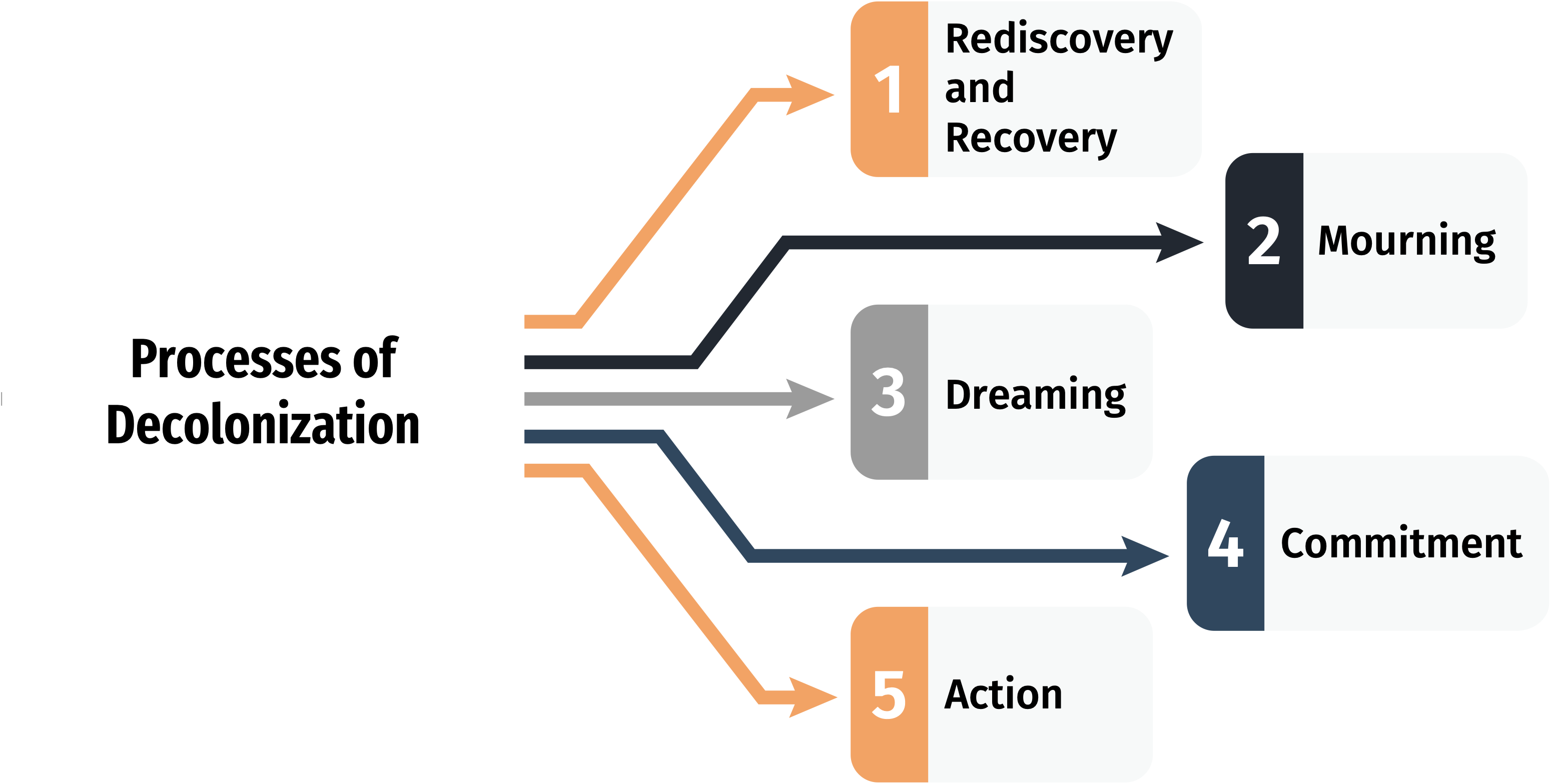 Collaborative Identity Decolonization as Reclaiming Narrative Agency: Identity Work of Bengali Communities on QuoraDipto Das and Bryan SemaanIn Proceedings of the 2022 CHI Conference on Human Factors in Computing Systems, New Orleans, LA, USA, 2022
While people’s identities can be marginalized through various forces, colonialism is one of the primary ways that continues to influence people’s lives and identities. Colonialism refers to the policies and practices where foreign powers migrate to other lands and alter the social structures, and thus identities, of local populations. What is less understood is how online spaces can support people in the aftermath of colonization in revising, repairing, and strengthening their identities—the process of identity decolonization work. Using trace ethnography beginning on 15 May, 2020 and ending on 15 July, 2020 and drawing on Poka Laenui’s framework of decolonization, we explore how South Asian Bengalis on the platform Bengali Quora (BnQuora) engage in collaborative identity decolonization work to reclaim narrative agency. We discuss how narratives serve to help people bounce back from threat or vulnerability—a concept we dub narrative resilience. We also describe potential implications for future scholarship focused on decolonization that extends multiple ongoing conversations around ICT for development, social justice, decolonial HCI, and identity research within the CHI community.
@inproceedings{10.1145/3491102.3517600, author = {Das, Dipto and Semaan, Bryan}, title = {Collaborative Identity Decolonization as Reclaiming Narrative Agency: Identity Work of Bengali Communities on Quora}, year = {2022}, isbn = {9781450391573}, publisher = {Association for Computing Machinery}, address = {New York, NY, USA}, doi = {10.1145/3491102.3517600}, booktitle = {Proceedings of the 2022 CHI Conference on Human Factors in Computing Systems}, articleno = {236}, numpages = {23}, keywords = {Bengali, Bengali Quora, Colonial, Decolonization, Identity}, location = {New Orleans, LA, USA}, series = {CHI '22}, methods = {ethnography, online, qual}, filter_type = {full} } - ICTD
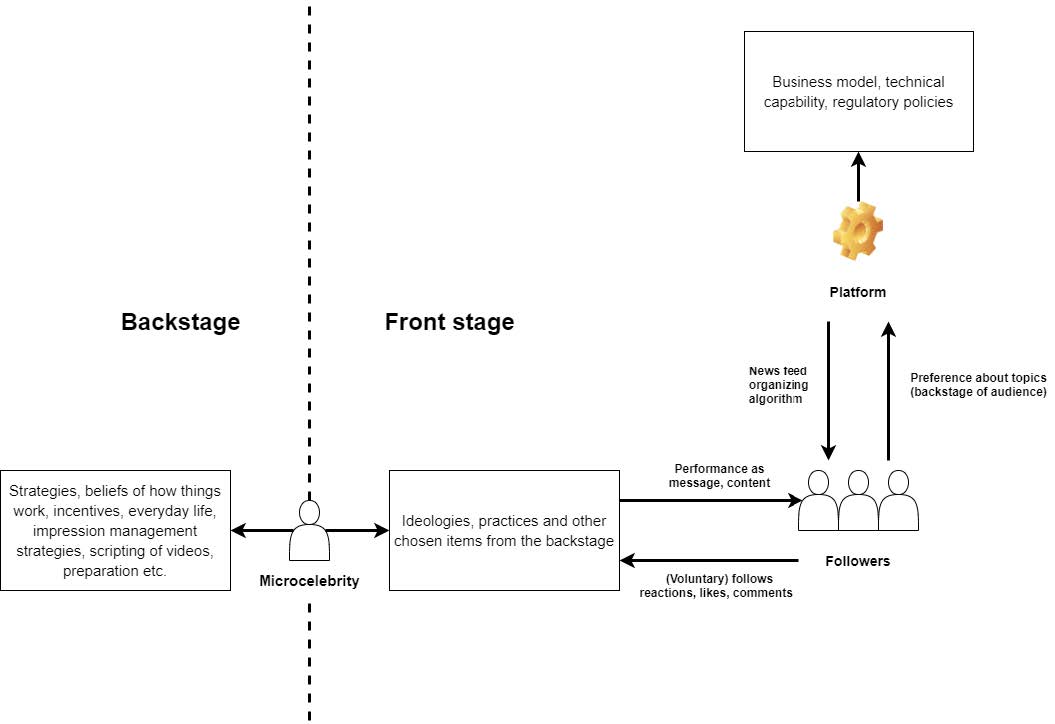 Understanding the Strategies and Practices of Facebook Microcelebrities for Engaging in Sociopolitical DiscoursesDipto Das, A.K.M. Najmul Islam, S M Taiabul Haque, and 2 more authorsIn Proceedings of the 2022 International Conference on Information and Communication Technologies and Development, Seattle, WA, USA, 2022
In this paper, we study popular microcelebrities from the Global South to understand their strategies and practices on Facebook. Unlike traditional celebrities who gain their reputation through different types of physical performance, these microcelebrities attain their status by presenting themselves in a favorable way to their online followers. We conducted interviews with 19 microcelebrities from Bangladesh and analyzed our data using actor-network theory (ANT) and Goffman’s dramaturgical analysis (DA) of human interaction. We discuss the complex socio-technical ecosystem of the microcelebrity and the roles of non-human actors, such as platforms and local internet infrastructure along with human actors’ practices. We explain the microcelebrities’ experience with the process of microcelebritification–the process of being a microcelebrity on social media through impression management, and becoming opinion leaders in local sociopolitical discourses as part of their online identity. Our paper contributes to the emerging literature on microcelebrities by highlighting the process viewed in the context of the Global South.
@inproceedings{10.1145/3572334.3572368, author = {Das, Dipto and Islam, A.K.M. Najmul and Haque, S M Taiabul and Vuorinen, Jukka and Ahmed, Syed Ishtiaque}, title = {Understanding the Strategies and Practices of Facebook Microcelebrities for Engaging in Sociopolitical Discourses}, year = {2022}, isbn = {9781450397872}, publisher = {Association for Computing Machinery}, address = {New York, NY, USA}, doi = {10.1145/3572334.3572368}, booktitle = {Proceedings of the 2022 International Conference on Information and Communication Technologies and Development}, articleno = {1}, numpages = {19}, keywords = {Actor-network theory, Dramaturgical analysis, Identity, Influencers, Microcelebrity, Social media, The Global South}, location = {Seattle, WA, USA}, series = {ICTD '22}, methods = {interview, online, qual}, filter_type = {full} } - COMPASS Note
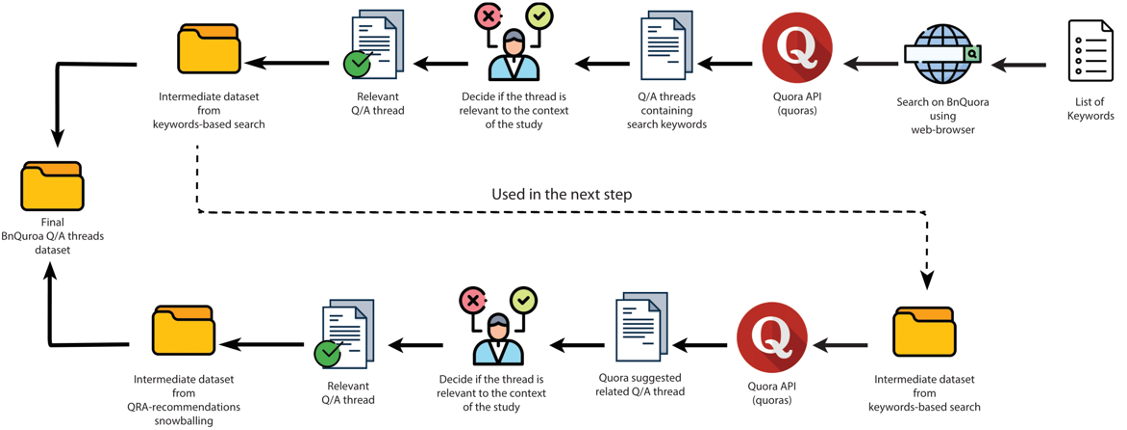 A Sociomaterial Perspective on Trace Data Collection: Strategies for Democratizing and Limiting BiasDipto Das, Arpon Podder, and Bryan SemaanIn Proceedings of the 5th ACM SIGCAS/SIGCHI Conference on Computing and Sustainable Societies, Seattle, WA, USA, 2022
Researchers heavily use online platforms for collecting trace data, i.e., data capturing user interaction on and with sociotechnical systems. Human-computer interaction scholars have highlighted the role of reflexivity while analyzing such data in the case of marginalized communities. Drawing on sociomaterial perspectives, we highlight how data collection approaches involving lists of search phrases and APIs can embed researchers’ positionality, perspectives, and biases within the datasets. In this note, we reflect on the data collection approaches of two papers that studied the sociohistorically marginalized Bengali communities on the question-and-answer site Bengali Quora. We illustrate how recommendation systems and data labeling workers can be included in the data collection process to democratize and limit bias while broadening and contextualizing the trace datasets for research.
@inproceedings{10.1145/3530190.3534835, author = {Das, Dipto and Podder, Arpon and Semaan, Bryan}, title = {A Sociomaterial Perspective on Trace Data Collection: Strategies for Democratizing and Limiting Bias}, year = {2022}, isbn = {9781450393478}, publisher = {Association for Computing Machinery}, address = {New York, NY, USA}, doi = {10.1145/3530190.3534835}, booktitle = {Proceedings of the 5th ACM SIGCAS/SIGCHI Conference on Computing and Sustainable Societies}, pages = {569–573}, numpages = {5}, keywords = {Apparatus, Bengali, Bias, Data Collection, Sociomaterial}, location = {Seattle, WA, USA}, series = {COMPASS '22}, methods = {qual, online, theory}, filter_type = {short} } - COMPASS Note
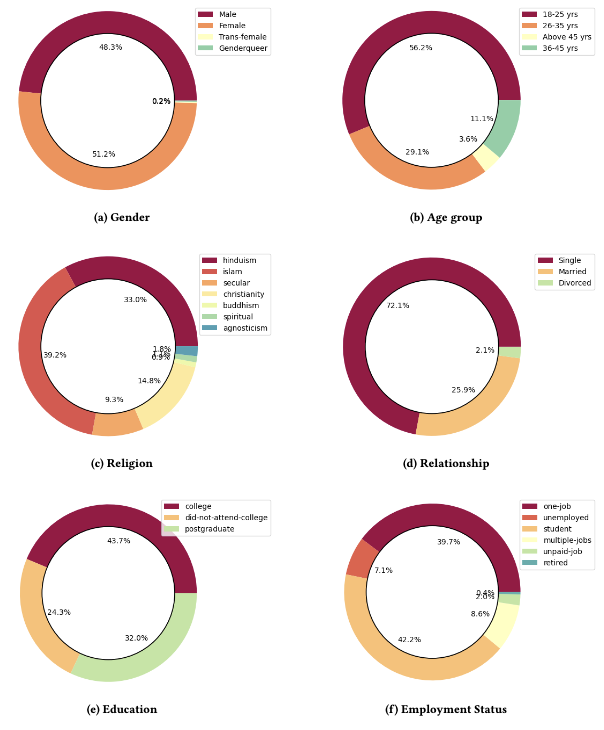 Importance of Digital Profile Pictures on Social Media Perceived by Different GroupsDipto Das, Malay Bhattacharyya, Laura S. Gaytan-Lugo, and 2 more authorsIn Proceedings of the 5th ACM SIGCAS/SIGCHI Conference on Computing and Sustainable Societies, Seattle, WA, USA, 2022
Nowadays much of human interaction are taking place online and on social networking sites. These platforms often encourage people to use profile pictures as parts of their profiles. To understand digital identity construction across various user communities and to foster inclusive, diverse, and sustainable online interactions among them, it is imperative to understand the perception of different users groups about digital profile pictures (DPP). In order to explore this, we conducted a cross-border analysis on different social media platforms. Based on a quantitative study on more than 500 responses from a two-week survey of social media users from 29 different countries, we observed how people from various demographic groups perceive the importance of DPPs. Our results suggest that the perception is significantly different across some social factors and social media usage behavior.
@inproceedings{10.1145/3530190.3534853, author = {Das, Dipto and Bhattacharyya, Malay and Gaytan-Lugo, Laura S. and Alabdulqader, Ebtisam and Ahmed, Nova}, title = {Importance of Digital Profile Pictures on Social Media Perceived by Different Groups}, year = {2022}, isbn = {9781450393478}, publisher = {Association for Computing Machinery}, address = {New York, NY, USA}, doi = {10.1145/3530190.3534853}, booktitle = {Proceedings of the 5th ACM SIGCAS/SIGCHI Conference on Computing and Sustainable Societies}, pages = {545–555}, numpages = {11}, keywords = {Perceived importance, Identity, Digital profile pictures}, location = {Seattle, WA, USA}, series = {COMPASS '22}, methods = {survey, online, quant}, filter_type = {short} } - CSCW Poster
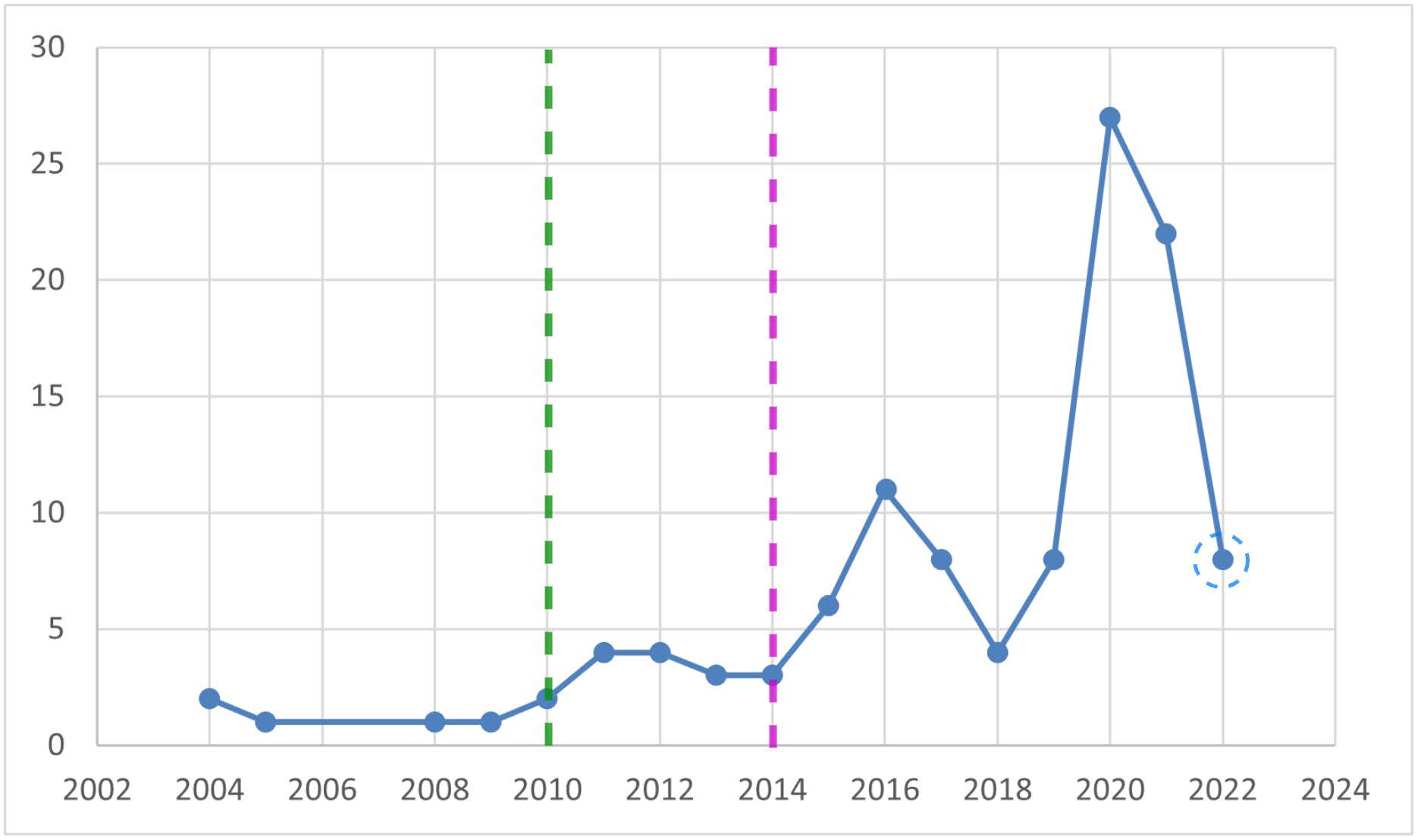 Decolonial and Postcolonial Computing Research: A Scientometric ExplorationDipto Das and Bryan SemaanIn Companion Publication of the 2022 Conference on Computer Supported Cooperative Work and Social Computing, Virtual Event, Taiwan, 2022
Decolonial and postcolonial computing scholars focus on the relationship between coloniality and technology. While many recent empirical and design studies have adopted these theoretical lenses, these conversations are often disconnected. Through a systematic literature review, we seek to understand patterns within and between decolonial computing and postcolonial computing. As an early step toward that objective, this poster presents results from our preliminary scientometric exploration of 115 papers’ metadata and discusses research trends and popular publication venues in these areas. Using citation network analysis, we found smaller communities in decolonial and postcolonial computing scholarship based on their use of theoretical frameworks, objectives, types of papers, authors’ collaboration and affiliations, and research sites and populations. We conclude by discussing future research directions to bring these communities into conversations with each other.
@inproceedings{10.1145/3500868.3559468, author = {Das, Dipto and Semaan, Bryan}, title = {Decolonial and Postcolonial Computing Research: A Scientometric Exploration}, year = {2022}, isbn = {9781450391900}, publisher = {Association for Computing Machinery}, address = {New York, NY, USA}, doi = {10.1145/3500868.3559468}, booktitle = {Companion Publication of the 2022 Conference on Computer Supported Cooperative Work and Social Computing}, pages = {168–174}, numpages = {7}, keywords = {decolonial computing, postcolonial computing, scientometric analysis, systematic literature review}, location = {Virtual Event, Taiwan}, series = {CSCW'22 Companion}, methods = {quant, theory}, filter_type = {short} } - IC2S2
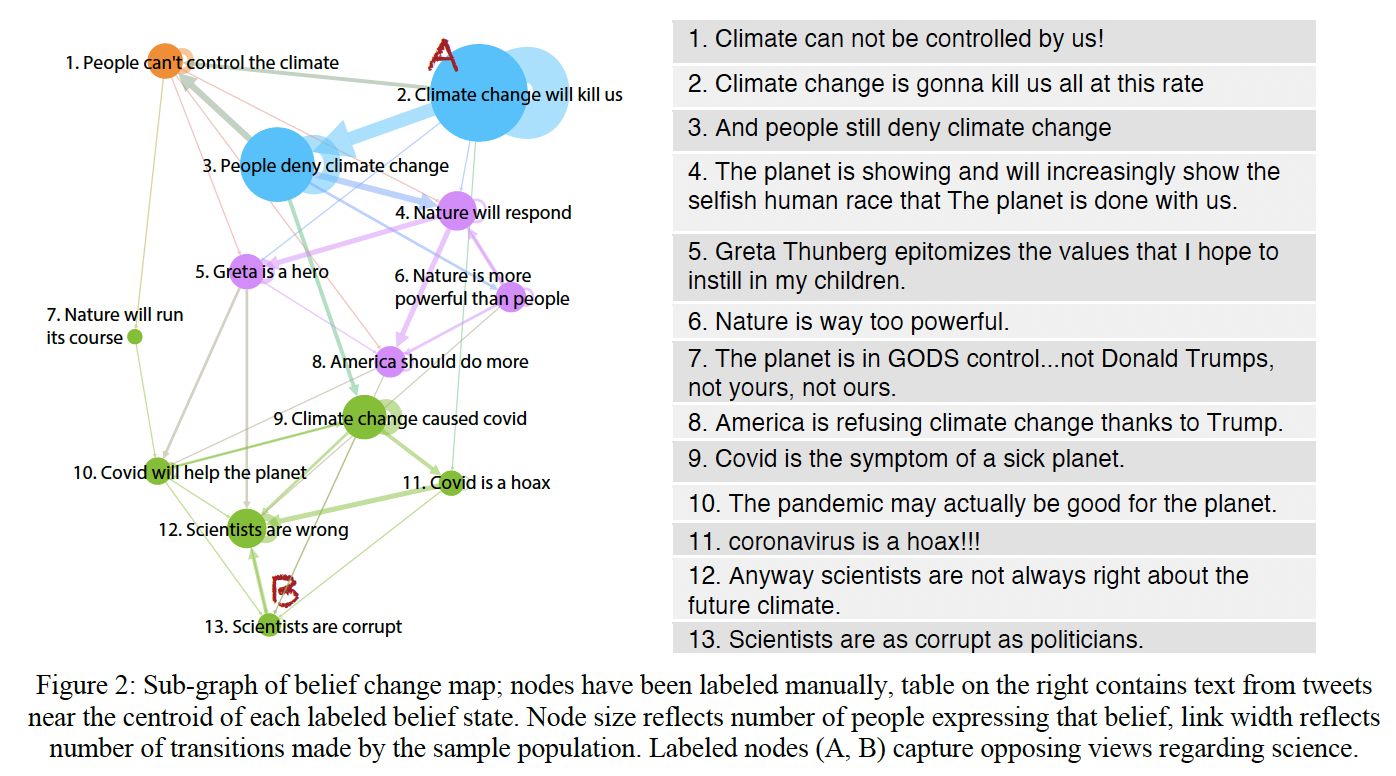 Mapping Belief Landscapes in Social MediaJoshua Introne, Dipto Das, Akit Kumar, and 1 more authorIn International Conference on Computational Social Science, 2022
 - CHI WorkshopHCI Across Borders: Navigating Shifting Borders at CHIVikram Kamath Cannanure, Naveena Karusala, Cuauhtémoc Rivera-Loaiza, and 10 more authorsIn Extended Abstracts of the 2022 CHI Conference on Human Factors in Computing Systems, New Orleans, LA, USA, 2022
Human–Computer Interaction (HCI) research has led to major innovations used by large and diverse audiences in different parts of the world. However, a recent meta-analysis [25] found that research at CHI is still highly (73%) concentrated in western contexts. HCI Across Borders (HCIxB) has gathered a diverse audience by conducting workshops and symposia since CHI 2016, aiming to expand borders within CHI. For CHI 2022, we expect to regroup for a virtual workshop to reflect on shifting boundaries from CHI’s past and emerging challenges in HCI research, education, and practice in recent years.
@inproceedings{10.1145/3491101.3503706,
  author = {Cannanure, Vikram Kamath and Karusala, Naveena and Rivera-Loaiza, Cuauht\'{e}moc and Prabhakar, Annu Sible and Varanasi, Rama Adithya and Tuli, Anupriya and Gamage, Dilrukshi and Noor, Faria and Nemer, David and Das, Dipto and Dray, Susan and Sturm, Christian and Kumar, Neha},
  title = {HCI Across Borders: Navigating Shifting Borders at CHI},
  year = {2022},
  isbn = {9781450391566},
  publisher = {Association for Computing Machinery},
  address = {New York, NY, USA},
  doi = {10.1145/3491101.3503706},
  booktitle = {Extended Abstracts of the 2022 CHI Conference on Human Factors in Computing Systems},
  articleno = {115},
  numpages = {5},
  keywords = {HCI and Global Development, HCI Across Borders, Geographic Diversity, Cultural Diversity},
  location = {New Orleans, LA, USA},
  series = {CHI EA '22},
  filter_type = {workshop}
}
2021
- CSCW
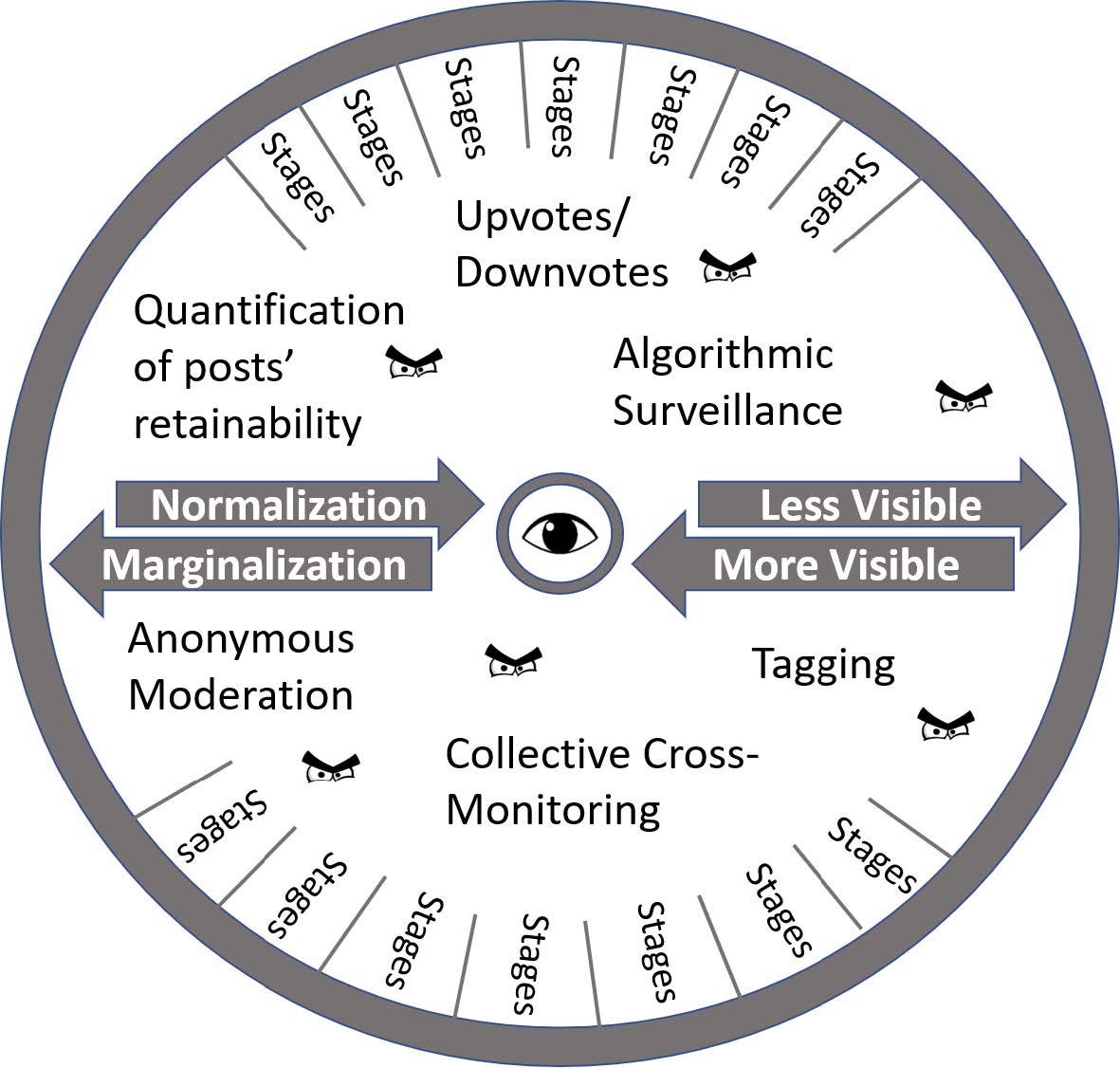 "Jol" or "Pani"?: How Does Governance Shape a Platform’s Identity?Dipto Das, Carsten Østerlund, and Bryan SemaanProc. ACM Hum.-Comput. Interact., Oct 2021
Best Paper Honorable Mention, Recognition for Contribution to Diversity & Inclusion
In this paper, we explore how sociotechnical systems support and impede the identity performances and identity expression of communities that have experienced a long history of colonialism, where colonization is the practice through which a foreign power reshapes the social structures and systems of other societies. We conducted a trace ethnography among members of a specific digital platform-Bengali Quora (BnQuora). BnQuora is part of the question and answer (Q&A) platform Quora, where people with this particular ethnolinguistic identity come together to engage in conversations about their identities; identities which were shaped through a long history of colonization in the Global South. In drawing on a conceptual framework that brings together identity performativity, governance, content moderation, and surveillance, we find that the sociotechnical mechanisms of governance that mediate people’s performances on the BnQuora platform give rise to a kind of platform identity-certain identities are privileged while others are pushed to the margins based on linguistic practices, nationalities, and religious affiliations. We illustrate this through the themes of moderators as prison guards, collective surveillance as enforcing a majority identity, algorithmic coloniality, and staging as self-imprisonment. Finally, we discuss the ways in which governance shapes a platform’s identity and can create, strengthen, and reinforce coloniality.
@article{10.1145/3479860,
  author = {Das, Dipto and \O{}sterlund, Carsten and Semaan, Bryan},
  title = {"Jol" or "Pani"?: How Does Governance Shape a Platform's Identity?},
  year = {2021},
  issue_date = {October 2021},
  publisher = {Association for Computing Machinery},
  address = {New York, NY, USA},
  volume = {5},
  number = {CSCW2},
  doi = {10.1145/3479860},
  journal = {Proc. ACM Hum.-Comput. Interact.},
  month = oct,
  articleno = {473},
  numpages = {25},
  keywords = {bengali, colonialism, panoptic performativity, platform identity, quora, sociotechnical systems},
  methods = {ethnography, online, qual},
  filter_type = {full}
}
2020
- ICTD
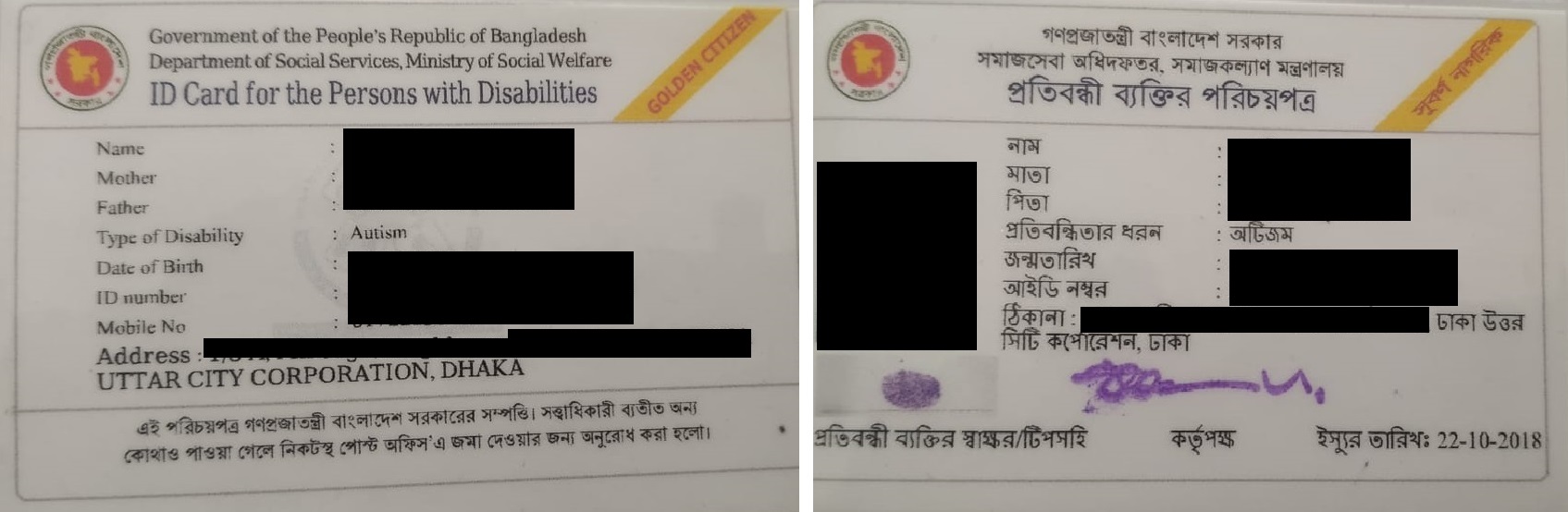 We Need More Power to Stand Up: Designing to Combat Stigmatization of the Caregivers of Children with Autism in Urban BangladeshAbdul Kawsar Tushar, Iffat Jahan Antara, Dipto Das, and 5 more authorsIn Proceedings of the 2020 International Conference on Information and Communication Technologies and Development, Guayaquil, Ecuador, 2020
Stigma, a critical challenge for social justice, has not received much attention in ICTD literature. Most existing designs that aim to combat stigma draw on an ’information and awareness’ approach that is often inadequate to address stigma’s deeper roots. To address this gap, we have conducted an interview and design study in five special needs schools1 in Dhaka, Bangladesh, involving twenty-nine parents and nine teachers. Based on our study, we present how the primary caretakers of children with autism face the stigma associated with autism spectrum disorder (ASD) and how misogyny, economic apprehension, and misinformation generate this stigma. Drawing from a range of scholarly work in sociology and psychology, we demonstrate how those factors are rooted in the colonial history and contemporary social hierarchy of Bangladesh. Based on our participatory design sessions, we introduce and analyze potential design directions and connect our findings to the politics of inclusion and social justice in the context of the developing world.
@inproceedings{10.1145/3392561.3394643, author = {Tushar, Abdul Kawsar and Antara, Iffat Jahan and Das, Dipto and Chandra, Priyank and Soron, Tanjir Rashid and Haque, Md Munirul and Ahamed, Sheikh Iqbal and Ahmed, Syed Ishtiaque}, title = {We Need More Power to Stand Up: Designing to Combat Stigmatization of the Caregivers of Children with Autism in Urban Bangladesh}, year = {2020}, isbn = {9781450387620}, publisher = {Association for Computing Machinery}, address = {New York, NY, USA}, doi = {10.1145/3392561.3394643}, booktitle = {Proceedings of the 2020 International Conference on Information and Communication Technologies and Development}, articleno = {15}, numpages = {12}, keywords = {Stigma, Social Justice, Mental health, LMIC, Design, Bangladesh, Autism}, location = {Guayaquil, Ecuador}, series = {ICTD '20}, methods = {ethnography, design}, filter_type = {full} } - CSCW Poster
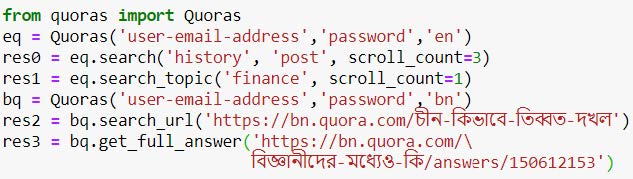 quoras: A Python API for Quora Data Collection to Increase Multi-Language Social Science ResearchDipto Das and Bryan SemaanIn Companion Publication of the 2020 Conference on Computer Supported Cooperative Work and Social Computing, Virtual Event, USA, 2020
Quora is a fast growing crowdsourced Q/A site that also creates online social networks and community practices among the users. Operating in several regional languages, it catalyzes more contextual discussions on local incidents and issues. To understand how language-specific social communities conduct Q/A-based discussions on online forums, we need to study Quora platform. As the first step to that, we need a data collection API. We introduce quoras, a Python API for collecting data from Quora. The API relies on Selenium, which is an open-source cross platform web automation framework. The API operates by creating custom HTTPS requests to Quora and parsing responses from it. It has the ability to perform many types of advanced searches that are otherwise only available on the Quora website, and not through any other existing APIs. The quoras API is released under an open-source MIT license and available along with the full API reference on GitHub. The latest stable release is also available on Python Package Index (PyPI).
@inproceedings{10.1145/3406865.3418333,
  author = {Das, Dipto and Semaan, Bryan},
  title = {quoras: A Python API for Quora Data Collection to Increase Multi-Language Social Science Research},
  year = {2020},
  isbn = {9781450380591},
  publisher = {Association for Computing Machinery},
  address = {New York, NY, USA},
  doi = {10.1145/3406865.3418333},
  booktitle = {Companion Publication of the 2020 Conference on Computer Supported Cooperative Work and Social Computing},
  pages = {251–256},
  numpages = {6},
  keywords = {social networking sites, quora, q/a sites, data collection, api},
  location = {Virtual Event, USA},
  series = {CSCW '20 Companion},
  methods = {dataset, tool},
  filter_type = {short}
}
2019
- HCC
 Construct of Sarcasm on Social Media PlatformDipto Das and Anthony J. ClarkIn 2019 IEEE International Conference on Humanized Computing and Communication (HCC), 2019
@inproceedings{8940819, author = {Das, Dipto and Clark, Anthony J.}, booktitle = {2019 IEEE International Conference on Humanized Computing and Communication (HCC)}, title = {Construct of Sarcasm on Social Media Platform}, year = {2019}, volume = {}, number = {}, pages = {106-113}, keywords = {Interviews;Computer science;Linguistics;Machine learning;Task analysis;Twitter;sarcasm;social media;qualitative study}, doi = {10.1109/HCC46620.2019.00023}, methods = {interview, online, qual}, filter_type = {full} } - TransAI
 Satire vs Fake News: You Can Tell by the Way They Say ItDipto Das and Anthony J. ClarkIn 2019 First International Conference on Transdisciplinary AI (TransAI), 2019
@inproceedings{8940415, author = {Das, Dipto and Clark, Anthony J.}, booktitle = {2019 First International Conference on Transdisciplinary AI (TransAI)}, title = {Satire vs Fake News: You Can Tell by the Way They Say It}, year = {2019}, volume = {}, number = {}, pages = {22-26}, keywords = {Trajectory;Data models;Computer science;Supervised learning;Feature extraction;Internet;Writing;satire;fake news;narrative trajectory;ibm watson}, doi = {10.1109/TransAI46475.2019.00012}, methods = {online, nlp, quant, mldl}, filter_type = {full} } - TransAI
 Understanding the Attention Model of Humans in Sarcastic VideosDipto Das, Md. Forhad Hossain, and Anthony J. ClarkIn 2019 First International Conference on Transdisciplinary AI (TransAI), 2019
@inproceedings{8940406, author = {Das, Dipto and Hossain, Md. Forhad and Clark, Anthony J.}, booktitle = {2019 First International Conference on Transdisciplinary AI (TransAI)}, title = {Understanding the Attention Model of Humans in Sarcastic Videos}, year = {2019}, volume = {}, number = {}, pages = {84-87}, keywords = {Videos;Artificial intelligence;TV;Semantics;Image segmentation;Analytical models;Computational modeling;sarcasm;attention model;videos;semantic segmentation}, doi = {10.1109/TransAI46475.2019.00022}, methods = {online, cv, quant, mldl}, filter_type = {short} } - MS Thesis
 A multimodal approach to sarcasm detection on social mediaDipto DasMissouri State University, 2019
@thesis{das2019multimodal, title = {A multimodal approach to sarcasm detection on social media}, author = {Das, Dipto}, year = {2019}, school = {Missouri State University}, methods = {online, cv, quant, mldl}, filter_type = {thesis} } - HCIxB @ CHI
 Microcelebrities in BangladeshMohammad Rashidujjaman Rifat, Dipto Das, Najmul Islam, and 1 more author, Glasgow, UK, 2019
@article{rifatmicrocelebrities, title = {Microcelebrities in Bangladesh}, author = {Rifat, Mohammad Rashidujjaman and Das, Dipto and Islam, Najmul and Ahmed, Syed Ishtiaque}, booktitle = {HCI Across Borders Workshop at CHI 2019}, location = {Glasgow, UK}, year = {2019}, filter_type = {unarchived}, methods = {interview, qual}, }
2018
- APSEC
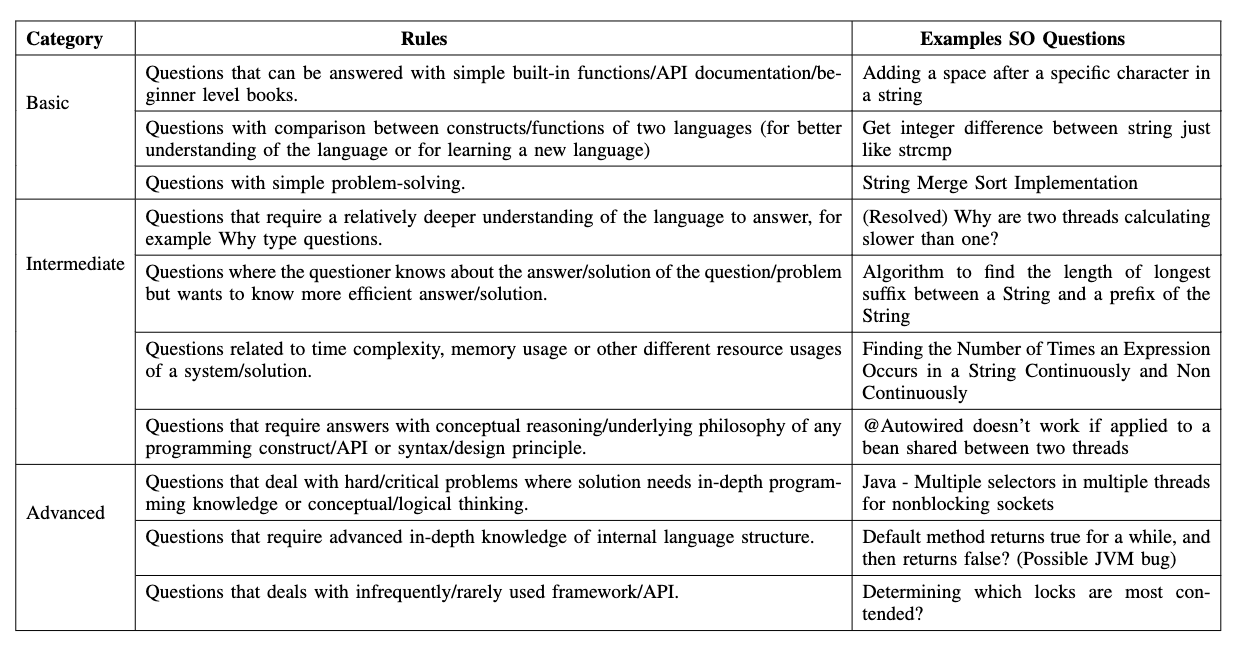 SOQDE: A Supervised Learning Based Question Difficulty Estimation Model for Stack OverflowSk Adnan Hassan, Dipto Das, Anindya Iqbal, and 3 more authorsIn 2018 25th Asia-Pacific Software Engineering Conference (APSEC), 2018
@inproceedings{8719532, author = {Hassan, Sk Adnan and Das, Dipto and Iqbal, Anindya and Bosu, Amiangshu and Shahriyar, Rifat and Ahmed, Toufique}, booktitle = {2018 25th Asia-Pacific Software Engineering Conference (APSEC)}, title = {SOQDE: A Supervised Learning Based Question Difficulty Estimation Model for Stack Overflow}, year = {2018}, volume = {}, number = {}, pages = {445-454}, keywords = {Java;Supervised learning;Estimation;Reliability;Labeling;Training;StackOverflow, Prediction model, Question Difficulty, Reputation}, doi = {10.1109/APSEC.2018.00059}, methods = {online, nlp, quant, mldl}, filter_type = {full} } - ICCBD
 Sarcasm Detection on Flickr Using a CNNDipto Das and Anthony J. ClarkIn Proceedings of the 2018 International Conference on Computing and Big Data, Charleston, SC, USA, 2018
Sarcasm is an important aspect of human communication. However, it is often difficult to detect or understand this sentiment because the literal meaning conveyed in communication is opposite of the intended meaning. Though the field of sentiment analysis is well studied, sarcasm has often been ignored by the research community. So far, to detect sarcasm on social media, studies have largely focused upon textual features. However, visual cues are an important part of sarcasm. In this paper, we present a convolutional neural network based model for detecting sarcasm based on images shared on a popular social photo sharing site, Flickr.
@inproceedings{10.1145/3277104.3277118, author = {Das, Dipto and Clark, Anthony J.}, title = {Sarcasm Detection on Flickr Using a CNN}, year = {2018}, isbn = {9781450365406}, publisher = {Association for Computing Machinery}, address = {New York, NY, USA}, doi = {10.1145/3277104.3277118}, booktitle = {Proceedings of the 2018 International Conference on Computing and Big Data}, pages = {56–61}, numpages = {6}, keywords = {CNN, Flickr, Sarcasm}, location = {Charleston, SC, USA}, series = {ICCBD '18}, methods = {online, cv, quant, mldl, dataset}, filter_type = {full} } - OzCHI
 Social media question asking (SMQA): whom do we tag and why?Hasan Shahid Ferdous, Dipto Das, and Farhana Murtaza ChoudhuryIn Proceedings of the 30th Australian Conference on Computer-Human Interaction, Melbourne, Australia, 2018
Social media question asking (SMQA) is an interesting application where users ask factual or subjective questions through social networks, also make invitations or seek favours, among other types of queries. Topics like what we ask, what motivates us to answer, how to integrate the traditional search engines with SMQA, etc. have been well investigated. However, the effect on tagging particular people in queries is yet to be explored. In this work, we focus on targeted queries in social networking sites, where people tag some of their friends, but also remains open to others who might want to respond. We conducted a two-phase study to investigate users tagging behaviour based on question topic and type, their rationale behind tagging those particular people, and corresponding outcomes of tagging. Our result contradicts with the existing works that tried to use automated tagging in social networks and identify design opportunities that need to be considered while developing new solutions to assist in this regard.
@inproceedings{10.1145/3292147.3292173, author = {Ferdous, Hasan Shahid and Das, Dipto and Choudhury, Farhana Murtaza}, title = {Social media question asking (SMQA): whom do we tag and why?}, year = {2018}, isbn = {9781450361880}, publisher = {Association for Computing Machinery}, address = {New York, NY, USA}, doi = {10.1145/3292147.3292173}, booktitle = {Proceedings of the 30th Australian Conference on Computer-Human Interaction}, pages = {12–22}, numpages = {11}, keywords = {tie strength, social media, question asking, friends}, location = {Melbourne, Australia}, series = {OzCHI '18}, methods = {online, survey, quant}, filter_type = {full} } - ICMI
 Sarcasm detection on Facebook: a supervised learning approachDipto Das and Anthony J. ClarkIn Proceedings of the 20th International Conference on Multimodal Interaction: Adjunct, Boulder, Colorado, 2018
Sarcasm is a common feature of user interaction on social networking sites. Sarcasm differs with typical communication in alignment of literal meaning with intended meaning. Humans can recognize sarcasm from sufficient context information including from the various contents available on SNS. Existing literature mainly uses text data to detect sarcasm; though, a few recent studies propose to use image data. To date, no study has focused on user interaction pattern as a source of context information for detecting sarcasm. In this paper, we present a supervised machine learning based approach focusing on both contents of posts (e.g., text, image) and users’ interaction on those posts on Facebook.
@inproceedings{10.1145/3281151.3281154,
  author = {Das, Dipto and Clark, Anthony J.},
  title = {Sarcasm detection on Facebook: a supervised learning approach},
  year = {2018},
  isbn = {9781450360029},
  publisher = {Association for Computing Machinery},
  address = {New York, NY, USA},
  doi = {10.1145/3281151.3281154},
  booktitle = {Proceedings of the 20th International Conference on Multimodal Interaction: Adjunct},
  articleno = {3},
  numpages = {5},
  keywords = {Facebook, image, sarcasm, sentiment, supervised learning, text},
  location = {Boulder, Colorado},
  series = {ICMI '18},
  methods = {online, quant, mldl},
  filter_type = {short}
}
2017
- UG Thesis
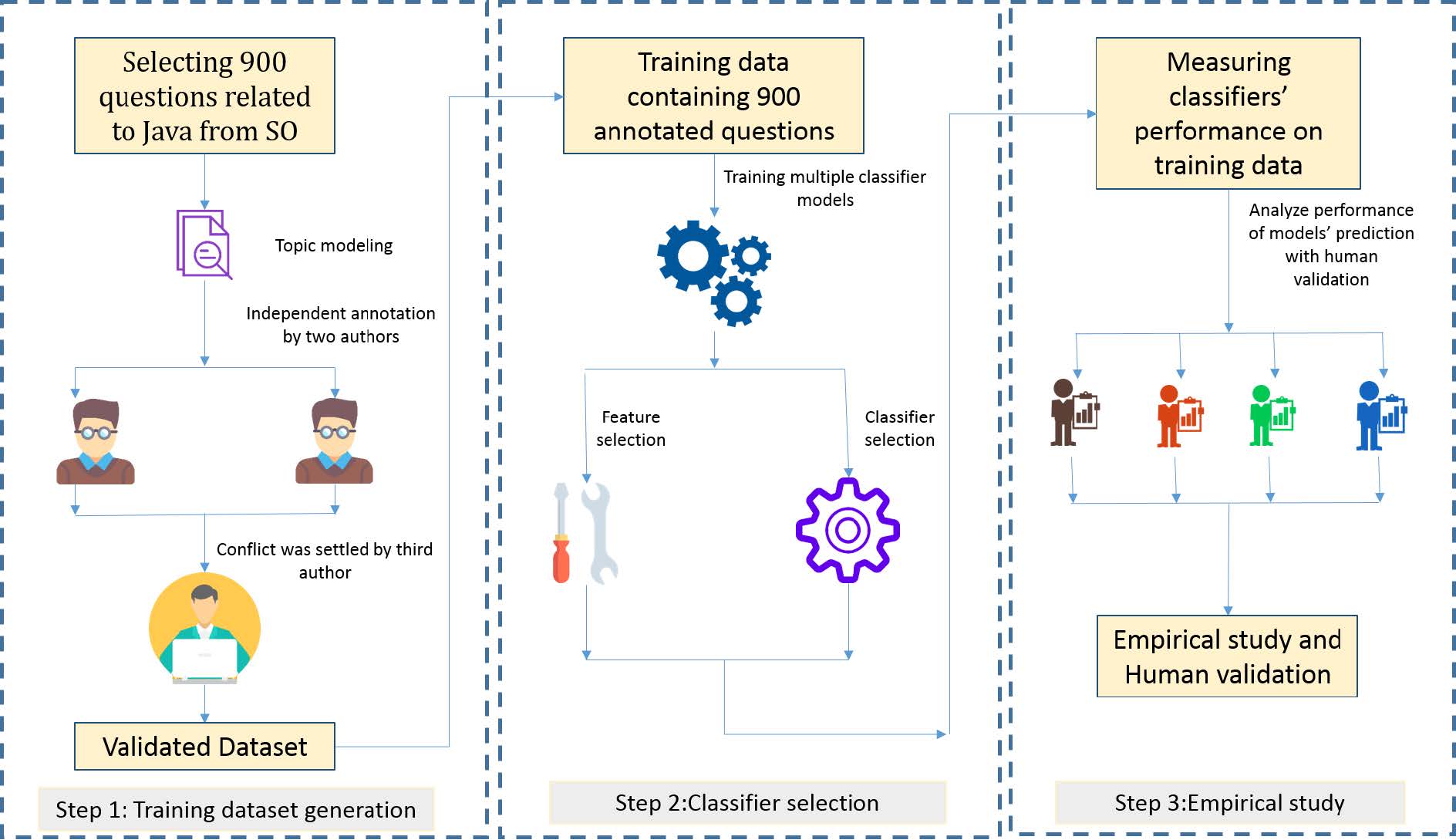 Question Difficulty Estimation of Stack Overflow PostsSk. Adnan Hassan and Dipto DasBangladesh University of Engineering & Technology, 2017
@thesis{hassan2019question, title = {Question Difficulty Estimation of Stack Overflow Posts}, author = {Hassan, Sk. Adnan and Das, Dipto}, year = {2017}, school = {Bangladesh University of Engineering & Technology}, methods = {online, quant, mldl}, filter_type = {thesis} } - NSysS Poster
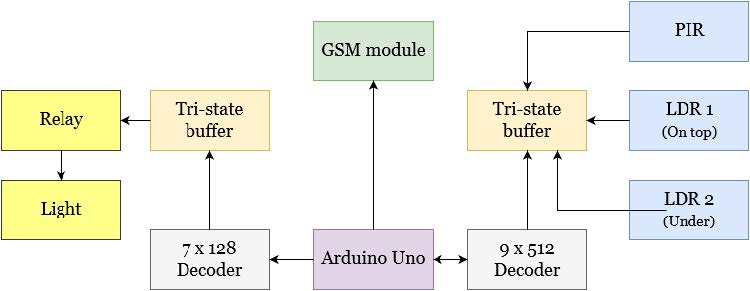 Cost-Efficient Smart Street Lighting SystemMd Fazlay Rabbi Masum Billah, Dipto Das, Imtiaz Karim, and 2 more authorsIn International Conference on Networking, Systems, and Security, 2017
@inproceedings{billah_nsyss17_lighting, author = {Billah, Md Fazlay Rabbi Masum and Das, Dipto and Karim, Imtiaz and Nabila, Shuha and Paul, Arnob}, title = {Cost-Efficient Smart Street Lighting System}, booktitle = {International Conference on Networking, Systems, and Security}, series = {NSysS '17}, year = {2017}, methods = {design}, filter_type = {unarchived} }
2016
- DEV Poster
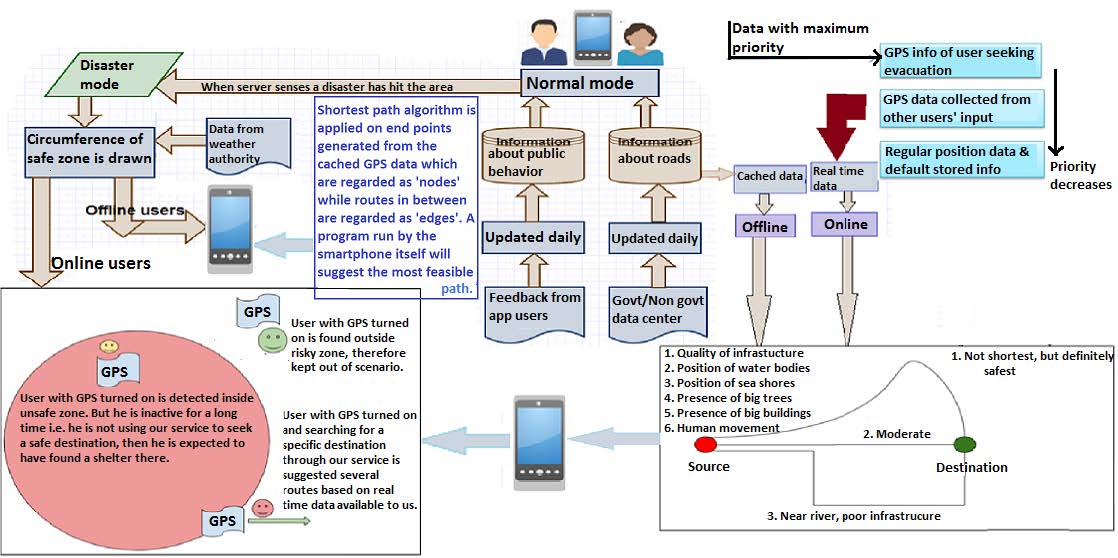 Faster Evacuation after Disaster: Finding Alternative Routes using Probable Human BehaviorAnurata Prabha Hridi, Dipto Das, Md Monowar Anjum, and 1 more authorIn Proceedings of the 7th Annual Symposium on Computing for Development, Nairobi, Kenya, 2016
This poster presents an app that can help disaster affected communities find efficient and safe evacuation routes to reduce the loss of human and resources, both during and after a disaster has hit. This proposed app will navigate people seeking evacuation through suitable routes based on geographical condition, structural vulnerability, disaster severity, traffic density, human mobility, etc. The choice of most effective and safe evacuation paths primarily relies on stochastic probability of human movement and requires frequently updated data. In order to achieve this, the app uses real time GPS data by simulating the movement pattern of its users connected to network as well as their previous movement patterns when they are found offline. This simulation process will find out the less congested and safer routes for faster traversal. Users can use these path suggestions to safely drive themselves out of the disaster stricken area. In case of a user being offline, this app will use data stored on the device to suggest evacuation routes based on human mobility pattern. The implementation of this idea will help the app users evacuate safely and quickly, thus minimizing human casualty due to disaster fatality.
@inproceedings{10.1145/3001913.3006632,
  author = {Hridi, Anurata Prabha and Das, Dipto and Anjum, Md Monowar and Das, Tanmay},
  title = {Faster Evacuation after Disaster: Finding Alternative Routes using Probable Human Behavior},
  year = {2016},
  isbn = {9781450346498},
  publisher = {Association for Computing Machinery},
  address = {New York, NY, USA},
  doi = {10.1145/3001913.3006632},
  booktitle = {Proceedings of the 7th Annual Symposium on Computing for Development},
  articleno = {23},
  numpages = {4},
  keywords = {stochastic human behavior pattern, shortest path algorithm, mixed logit model, disaster risk mitigation, Disaster evacuation},
  location = {Nairobi, Kenya},
  series = {ACM DEV '16},
  methods = {design},
  filter_type = {short}
}